Mariachi El Bronx
Amoeba Hollywood - February 17th @ 5:00pm
Mariachi El Bronx celebrates their new album, Mariachi El Bronx IV (ATO Records), with a live stripped-down performance and vinyl signing at Amoeba Hollywood Tuesday, February 17th at 5pm!
Show is free/all-ages. Album purchase at Amoeba required to attend the post-show signing.
To attend the signing:
- Pre-purchase Mariachi El Bronx IV LP in-store at Amoeba Hollywood to receive a ticket to attend signing. LP will be ready for pickup on event day by showing ticket with attached receipt.
- Band will be signing the new album only. No outside or additional items please.
- Fans can get 1 or 2 copies of the new LP signed.
- Space is limited.
After a 10 year hiatus, the beloved Los Angeles trailblazers Mariachi El Bronx are dusting off their charro suits again. The alter ego of punk rock heroes The Bronx, this band’s unexpected headlining career began back in 2008 after the hardcore group sought ways to grow creatively while celebrating the Hispanic music and culture they were surrounded by growing up in Los Angeles. Although seemingly different, the band doesn’t see the genres of punk and mariachi as mutually exclusive — to them, punk and mariachi are spiritually entwined forces rooted in resilient storytelling. “Punk rock and mariachi music are very similar in soul,” says songwriter and lead vocalist Matt Caughthran. “It's working class music. It’s real music.”
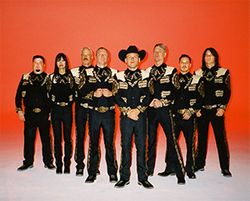
Composed of Caughthran, Joby J. Ford (guitar, accordion), Jared Shavelson (drums), Fredo Ortiz (percussion), Ray Suen (violin), Brad Magers (trumpet), Ken Horne (jarana/guitar), and Vincent Hidalgo (guitarrón), Mariachi El Bronx has released three acclaimed full-length albums. They’ve opened shows for Foo Fighters, the Killers, and Flogging Molly; performed on the David Letterman Show stage; at festivals including Coachella and Glastonbury; and in their own Tiny Desk Concert.
Getting back to playing together as Mariachi El Bronx felt joyous and familiar from the jump, says Ford. They opted to record music once again with producer John Avila (Oingo Boingo) in his San Gabriel Valley garage studio, after making their last album at a large remote countryside studio in Virginia. But the writing and recording itself of what soon became the band’s fourth album, the forthcoming Mariachi El Bronx IV, proved more fraught than they’d initially anticipated.
Within the year that he began writing lyrics and the band completed recording Mariachi El Bronx IV, Caughthran contended with the deaths of several loved ones. Additionally, as the group was laying down tracks for the album at Avila’s studio, the Eaton Canyon fires set much of the east side of Los Angeles ablaze, killing people and ripping apart communities in its wake. “We came out of the studio one night, the entire side of the hill was just on fire,” Ford recalls. While dealing with grief in his personal life and within his longtime home of Southern California, Caughthran was experiencing an enormity of love and tied the knot with his girlfriend the same year.
These immense feelings of happiness and hope from his marriage, clashing with a staggering sense of loss, crept into the lyrics that Caughtran was writing. The songwriting process first “started as a battle between love and death” as he dealt with the weight of everything. Yet it ended up becoming a vessel for Caughthran and his bandmates to process “all the chaos of the world,” he says. That push and pull is also palpable on a song like “Forgive Or Forget,” the album’s high-octane opener. Amidst its galloping rhythm, a uniquely hallucinogenic tone emerges from Suen’s violin that complements Caughthran’s lyrics about someone “who’s completely disheveled and a little washed out, looking back on their life in a way that's kind of hazy,” he says. “There's a little bit of hope there, but it's pretty dark in general.”
Another single, “Song Bird,” tackles a different kind of terror that will feel uncomfortably familiar to any creative person: Writer’s block. Caughthran was going through a rough bout of zapped creativity when Hidalgo came up with a pulse-quickening guitar line in the studio. To Caughthran, Hidalgo’s riff reminded him of a hummingbird flapping its wings. Then he remembered the hummingbird he’d often see outside of his office window, where he often writes. The writer's block faded instantly, and the lyrics poured out of his brain. In it, he wails: “I was staring at another empty page / Feeling every single second of my age.” The arduousness of the creative process itself became the subject of the song, along with ruminations on detachment and escape.
“There is a tension that I don't think was intended that came out,” says Ford of the album. That surprising strain resulted in a collection of epic stories, documenting the stories of gamblers, former playboys, warriors, lovers — characters that became vessels for the specific pressures of being alive right now. The contemporary disillusionment with love underscores the “RIP Romeo,” for instance, which Caughthran describes as both the death of Romeo as a figure and a culture in mourning.
Caughthran’s own internal conflict in dealing with loss and love alike emerged on the charging “Bandaleros,” which Caughthran describes as the “battle cry of the album.” At a time when chaos is surging around the world and close to home, Caughthran wanted to write a call to arms that imbued these feelings of courage and righteous indignation. The song concludes on a hard-won note of heroism: “We ride out / No matter how bad it may seem.”
With four albums now under their belts as Mariachi El Bronx, the band still considers themselves lifelong students of mariachi; its members strive to continue progressing in their musicianship while paying homage to this storied artform. “This band has always been about learning and exchanging culture through music and art,” says Caughthran. “That’s what it’s all about! Everything we do comes from the heart and soul.”