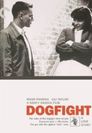
War - There are several documentaries that focus on Latino and Hispanic issues in American wars. From Juan Ponce de León and Hernan de Soto sniffing around the modern day US in search of eternal youth and gold, through aggression between the US, Mexico and Spain, to the disproportionate reliance on Latinos to fight our modern wars, these DVDs cover a lot of territory.
Hispanic Heritage Month - American Latino related docs
War - There are several documentaries that focus on Latino and Hispanic issues in American wars. From Juan Ponce de León and Hernan de Soto sniffing around the modern day US in search of eternal youth and gold, through aggression between the US, Mexico and Spain, to the disproportionate reliance on Latinos to fight our modern wars, these DVDs cover a lot of territory.
Hispanic Heritage Month - Latinos in American Cinema
Aside from a brief fetish for Latin Lovers in the silent era, roles for Hispanics and Latinos in American silent film were few, far between and generally quite minor. In the sound era, images of Hispanics and Latinos in Hollywood began to increase in number, although Latino characters were at first usually portrayed by non-Latinos in brownface whilst real Latinos were frequently used as all-purpose ethnic types.

Ramon Novarro and Lupe Velez (as Navaho) in Laughing Boy Leo Carrillo and Duncan Renaldo
1930s- In the first decade of sound, there weren't many roles for Hispanics or Latinos aside from in popular, long-running series like Zorro, The Cisco Kid and The Mexican Spitfire series, the latter a vehicle for Lupe Velez. Pedro Armendáriz mostly starred in Mexican films; when cast in American ones, he invariably had to exaggerate his accent sufficiently. Throughout the '30s and the following decade, Arizona-born Chris Pin-Martin appeared in almost eighty films, invariably as a heavily-accented, broken English-speaking Mexican in small roles and as sidekicks, like Pancho in the Cisco Kid movies and as Gordito in the Zorro series. The Zorro franchise, begun in the 20s, continued to be popular throughout the era. The Cisco Kid series dated back to the teens. In them, unlike with Zorro, Hispanic actors like Leo Carrillo, Duncan Ronaldo and Cesar Romero were usually cast in the lead. Hispanic actress Rita Hayworth (born Margarita Cansino) was initially billed as Rita Cansino in a series of unrelated B-movies. In them, she usually played a variation on the fiery Mexican maiden in need of an honorable Anglo's protection and love.
¡Silencio! - The Hispanic & Latino experience in the silent era
In film's first decade, a few Latinos in fact were involved in American filmmaking. Before the Hollywood era, the filmmaking process wasn't centralized and films were shot around the country by wealthy entrepreneurs, a few of which were Hispanic. However, most American films in the 1890s were under ten minutes long and tended to focus on single actions like sneezing, laughing or opening a door.
On the margins' margins - Asian Latinos - Latasian 101

Habana, Cuba
Japanese Brazilians
What distinguishes countries in the New World from those in the Old is that here there's no such thing as a Nation-State and no countries in the western hemisphere correspond to a single ethinicity. Just as is the case in Anglo America (The Bahamas, Belize, Canada, Guyana, Jamaica, the United States and the Virgin Islands), there are Latinos whose race is Asian, black, Native, white or a combination thereof. In observance of Hispanic Heritage Month, which begins today, the focus of this blog on Asian Latinos aims to highlight just one example of the under-recognized heterogeneity of Latino culture.
Hispanic vs. Latino & Hollywood Brownface
Hispanic Heritage Month

September 15th to October 15th is officially recognized as Hispanic Heritage Month in the USA.The dates of the observance were chosen due to the timing of El Grito, the "cry" that brought the independence of Costa Rica, El Salvador, Guatemala, Honduras and Nicaragua's independence (followed closely by Mexico and Chile.).

Some fellows celebrating "El Grito"
"Hispanic" vs. "Latino"
I suppose it's kind of interesting that whoever named the month chose the term "Hispanic" instead of, say, "Latino." Hispanic sounds old-fashioned to me, but then again, I know people younger than me who refer to themselves as just that. I still think it's like calling February "Colored History Month" or May being "Oriental Heritage month." The government's choice of "Hispanic" probably owes to the fact that the term "Latino" was in less common usage forty years ago when the observance was instigated by Lyndon B. Johnson (initially as Hispanic Heritage Week). Both terms are considered offensive by some indigenists since they disappropriate Native Americans from their origins and languages by defining people with sometimes no European ancestry with Eurocentric terms.