This is the first installment in a three part history of early Black Cinema.
To read Part I, covering the independent Race Movie years of the 1910s and '20s, click here
To read Part III, covering the TV Age of the 1950s and '60s, click here
In the silent film era, most roles for minority characters were filled by white actors in make-up. As a result, Asians and blacks began making their own, alternative cinemas. But whereas Asian-American silent film quickly faltered, black silent film flourished and a great number of race movies were cranked out to eager and under-served black filmgoers.
By the 1930s, though yellowface and redface continued to be common practice, blackface began to disappear from the mainstream as Hollywood began efforts to woo the audience it had previously been content to insult. This meant there were many new opportunities for black actors, albeit mainly as musicians, porters, chauffeurs, waiters, hat check girls, maids, bootblacks, convicts, bartenders, bone-through-the-nose Africans or buffoons. Because of the improving but still less-than-satisfying opportunities afforded by Hollywood, many black actors supplemented their Hollywood bit parts with simultaneous careers in race movies.
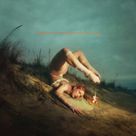
Kay Nielsen was a Danish illustrator and key figure of the golden age of illustration. His art evinces the influence of ukiyo-e heavy Utagawa Hiroshige as well as Art Nouveau master Aubrey Beardsley. However, his synthesis was his own-- an instantly recognizable, highly ornate, fantastical world of pastels and light.


In real life, zombies are entranced or betwitched servants or thralls of a Vodou/Voodoo/Vodun bokor... or, sorcerer. They can be living or dead. In movies, however, zombies have gradually taken on a variety of aspects borrowed from other undead, mainly the aforementioned vampires and ghouls.
Ghouls were originally from Arabia and are an evil sort of desert-dwelling, shapeshifting Djinn that eat children and the dead, afterward taking on the meal’s appearance, thus proving the truth behind the old adage, “You are what you eat.” In films, there had been relatively few attempts to depict ghouls. The British film The Ghoul (1933) concerned an undead Egyptologist’s (played by Boris Karloff) attempt to attain immortality and to kill his former servant. It had more in common with the previous year's Boris Karloff vehicle, The Mummy. Other ghoul movies, like The Mad Ghoul (1943), Nobody’s Ghoul (1962), Boy Meets Ghoul (1965), The Ghoul (1975), Ghoul School (1990), Ghoul Panic (2000) and The Ghouls (2003) are unlikely to ring many bells.
This installment of the Los Angeles Neighborhood Blog concerns Wilshire Park. Vote here to vote in the Neighborhoods of Los Angeles Blog Poll (NLABP) and/or here for the Los Angeles County Community Blog Poll (LACCBP). To vote for Orange County neighborhoods, vote here.
Wilshire Park is a small, Midtown neighborhood whose borders are Olympic Blvd on the south, Crenshaw Blvd on the west, Wilshire Blvd on the north and Wilton Place on the east. Its desirable, central location and quaint charm has lead to various parties attempting to claim it for their benefit. Some residential realtors have extended the traditional use of the term “Westside” to the neighborhood, hoping to attach that area’s mostly white and affluent connotations to the neighborhood. Commercial interests have occasionally led to it being described as part of neighboring Koreatown, presumably with an eye on extending the bustling commercial center into the quiet neighborhood.
Wilshire Blvd suddenly gets quiet in Wilshire Park
An attractive row of typical Wilshire Park homes
Aside from a brief fetish for Latin Lovers in the silent era, roles for Hispanics and Latinos in American silent film were few, far between and generally quite minor. In the sound era, images of Hispanics and Latinos in Hollywood began to increase in number, although Latino characters were at first usually portrayed by non-Latinos in brownface whilst real Latinos were frequently used as all-purpose ethnic types.

Ramon Novarro and Lupe Velez (as Navaho) in Laughing Boy Leo Carrillo and Duncan Renaldo
1930s- In the first decade of sound, there weren't many roles for Hispanics or Latinos aside from in popular, long-running series like Zorro, The Cisco Kid and The Mexican Spitfire series, the latter a vehicle for Lupe Velez. Pedro Armendáriz mostly starred in Mexican films; when cast in American ones, he invariably had to exaggerate his accent sufficiently. Throughout the '30s and the following decade, Arizona-born Chris Pin-Martin appeared in almost eighty films, invariably as a heavily-accented, broken English-speaking Mexican in small roles and as sidekicks, like Pancho in the Cisco Kid movies and as Gordito in the Zorro series. The Zorro franchise, begun in the 20s, continued to be popular throughout the era. The Cisco Kid series dated back to the teens. In them, unlike with Zorro, Hispanic actors like Leo Carrillo, Duncan Ronaldo and Cesar Romero were usually cast in the lead. Hispanic actress Rita Hayworth (born Margarita Cansino) was initially billed as Rita Cansino in a series of unrelated B-movies. In them, she usually played a variation on the fiery Mexican maiden in need of an honorable Anglo's protection and love.
Amoeba and the Amoeba Music mark and logo are trademarks of Amoeba Music Inc.
The views and opinions expressed in Amoeblog are those of the individual bloggers and not necessarily those of Amoeba Music.