Amoeblog

Celebrate Today's Holidays With a Movie or Two -stocking stuffers for the ones you love

Posted by Eric Brightwell, October 16, 2007 03:26pm | Post a Comment


Boss Day


Dictionary Day


Hurricane Thanksgiving Day - US Virgin Islands


St. Gallus Day - Switzerland


World Food Day


Anniversary of the Pope's Election - Vatican City


Ether Day


National Feral Cat Day
Become a fan of Eric's Blog on Facebook!>

Cinéma Direct vs. Cinéma Vérité - The Quest for Cinematic Truth

Posted by Eric Brightwell, October 15, 2007 12:55pm | Comments (2)
Today marks the one billionth time the term "cinéma vérité" was applied incorrectly. This time it was in reference to a commercial for blue jeans or cell phones or something. I know what you're saying: "They're just words, man" or, "why do we have to categorize anything?"

Jay Ward's "Cap'n Crunch and Friends" $13.98 at Amoeba

Yeah, I see your point, Mr. Manson. Why don't I prepare for you a fro-yo topped with Cap'n Crunch, which is my term for rat poison? They're just words, after all. Oh, and the yogurt isn't really yogurt.

My point is, what is most often referred to as cinéma vérité is not only philosophically diametrically opposed to actual cinéma vérité but (more damningly), it conflates irreconcilable understandings of the nature of reality, God, the universe and everything else!

Cinéma Direct -or- what pretty much everyone erroneously refers to as Cinéma Vérité

Cinéma Direct is documentary genre that began in Québec in 1958. The Quiet Revolution, a cultural assertion of the French-speaking majority under the rule of the Anglo-minority, encouraged the development of a distinct Québécois identity.

The most unfortunate by-product of la Revolution Tranquille

As part of this cultural expression, filmmakers sought to re-instill truthfulness in the documentary genre, which, by the 1950s was usually studio-based propaganda rife with dramatizations and mickey mousing. In 1922's Nanook of the North, for example, Nanook (actually an Inuit named Allakariallak living in Inukjuak, Quebec) was built an oversized igloo to share with his wife (who wasn't really his wife) to allow a camera crew and sufficient lighting inside. He was filmed hunting with a harpoon. In the scene, Allakariallak looks in the direction of the camera laughing and smiling memorably. He only knew how to hunt with guns. You can almost hear Robert Flaherty taking him aside and asking, "Could you act... you know... more Eskimo?"

Continue reading...

Burnt Offerings

Posted by Eric Brightwell, October 1, 2007 03:29pm | Comments (2)
When I was a young'un, my parents exposed me to many horrifying films which they correctly reckoned I wouldn't understand but wrongly assumed wouldn't scar me for most of my adult life. I was four or five when my father took my six-year-old sister and I to see Alien. When I saw it again about twenty years later I was surprised at how vivid my memories were, although I could now recognize that the decapitated Ash was an android, and not, as I had previously surmised, someone with milk in his veins.


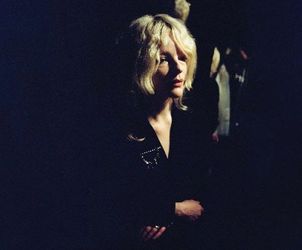
Another movie that haunted me when I was young that I have spent many years wondering about. I saw it in the late 1978 wood-paneled RCA Selectavision VCR. I didn't have much to go on. I remembered a country house, black & white sequences, an old woman in a chair that gets spun around and, most importantly, a chauffeur with an awful and inappropriate smile that he flashes during a funeral. After that I used to smile creepily at my younger brother whilst my sister relied on draping her long hair over her face like a Yūrei.

   Yurei

Anyway, for years I have repeated those vague details to co-workers and horror aficionados, blogged about it and watched things like House of Seven Corpses
to no avail.

Hispanic Heritage Month

Posted by Eric Brightwell, September 14, 2007 09:31am | Post a Comment
   
Hispanic Heritage Month began in 1968 as Hispanic Heritage Week. We never learned about it in my schools, which prided themselves on being among the most progressive in the country. Every year we celebrated Black History Month, which began, amazingly, in 1926 as Negro History Week back when the Ku Klux Klan enjoyed its peak membership of 4 to 5 million people (or a whopping 15% of the nation's eligible men). Anyway, we students always raised the same questions: Is it in February because it's the shortest month? Where's Asian or Latino History Month? Where's White History Month? I don't recall my teachers having the answers except that we learned plenty of white history year-round and Black History Month was a time to recognize the contributions of a people to American culture who'd been systematically ignored.

So, this year I found out about Asian Pacific American Heritage Month, which began in 1978 and which I had NEVER heard mentioned. Some Asians I knew had, including, of course, noted justice-minded free-thinker Ngoc-Thu Thi Nguyen. She said it was marked by more documentaries about Japanese Internment Camps being shown on PBS. At the same time, I found out about Hispanic Heritage Month, which I mentioned started in 1968, and which I'd also never heard about. 

Continue reading...

Summer of Sequels™ Presents -- Jason Bourne

Posted by Eric Brightwell, August 13, 2007 10:05pm | Post a Comment

Jason Bourne is a guy who's trying to remember his past and figure out who he is because he suffers from amnesia.
In his quest, he was informed that his real name is David Webb and he was born in Nixa, Missouri but he seems to totally ignore that, or at least they don't depict him trying to glean anything from this.

So I'm here to help fill in the blanks, like it or not. No spoiler warning.

Webb is an occupational family name meaning (in O.E.) "weaver." OK, so Jason/David's family is from the British Isles. He looks pretty Irish. Nixa, Missouri is in the Ozark Mountains. In 1717, the Ulster-Scots, aka Scots-Irish, began to move to the area, which was  mostly abandoned by the indigenous population during a famine in the 13th century.


the Ozarks, a mix of the Shire and Rivendell

Rich, slave-owning planters on the South Coast called the new inhabitants "hillbillies" because, as Protestants back in the British Isles, they had supported William III of Orange (Billy) and lived in the hills.

BACK  <<  2  3  4  5  6  7  8  9  >>  NEXT