Amoeblog

Vinyl Confidential, 1.2 – the odd order of oblong boxes

thoughts, close to home ...
The record geek can be recognized in his home by the lovingly quick glance he gives the album covers framed on his walls -- next to the original Family Dog, Fillmore and Frank Kozik posters -- a look both swift and penetrating, but thoughtful, as if he was recapturing a fine moment ... or simply undressing them. This is either followed by pained reverential silence or a thought in his head like, “I really wish I could find a Japanese or Thai pressing of that record.” The record geek will stand back from the framed album at a distance, his head slightly cocked to one side, in his hand a Scotch or Irish whiskey, eventually, after a long moment of wishing or searching Ebay, he -- and it is always a he -- will cautiously slink forward to within a millimeter of the frame, study the blur of lines and color in the cover art and remember being fourteen years old again. Then he'll return to his former distant position by the sliding door in the living room, give the framed art piece one last glance, wander over to his stereo system and play the Import CD version of that very record, grimace as he recognizes the inferior digital sound of the classic disc he still can’t believe everybody doesn't own. He sighs exhaustively. But that’s where the Scotch comes in; he pours himself one more drink, collapses in his mid-century arm chair and contemplates a better tomorrow.  
Posted by Whitmore on July 26, 2009 at 10:15pm | Comments (1)

Silence is Golden Earrings ...

one more post card from Vashon Island

Dear 45 Records room,
 
One more Interstate 5 story: just outside of Sacramento in a fast food joint, I got into a quick conversation with a couple of bikers from the Boozefighters Motorcycle Club, one of the oldest clubs around. They had just come back from the annual Fourth of July weekend gathering in Hollister, the site of the infamous 1947 riot which was the basis for the classic 1951 film The Wild One, starring Marlon Brando and Lee Marvin. (Marvin’s character "Chino" is said to have been based on Wino Willie, founder of the BFMC). But while we were talking I overheard this woman at a table behind me say “He's a goddamned freaking national treasure ... I heard he has, like, a closet filled with mason jars of urine.” Anyway?
 
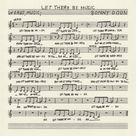
Here is the song hopelessly stuck in my head, tormenting me as I drove over the Siskiyous Mountain Pass on our way to Ashland, Oregon. And as I drove all night, my hands wet on the wheel, I thought I heard a voice in my head. Oddly enough, at the 4310 ft. summit, around about half past four in the morning, I found myself inexplicably shifting gears ...
 
Anyway, it's pretty late, say hey to the straight edge records and the 200 or so BRMC records we have stacked in the 45 Records Room. One more thing-- give a little peace, love and understanding to the new Elvis Costello Box, and I’ll see you all Monday afternoon.


Posted by Whitmore on July 19, 2009 at 11:52pm | Post a Comment

Silence is Golden?

A Post Card from the Puget Sound
Dear 45s Record room,
 
I just finished driving due north to beautiful Vashon Island off the coast of Seattle; 1200 miles of dodging Highway Patrol speed traps, over-thinking routes and stuck in hyper caffeine overdrive listening to crazy-ass tirades from loony-right-wingnut talk radio. I suspect the elitist-socialist-coast-hugging-Hollywood-sissy-leftist-yoga flexing-public radio-wingnut they’re talking about is me, except I’m just a record geek on vacation driving a Ford mini-van with my wife and kid on that silvery ribbon of highway. By the way, gas wasn’t terribly overpriced anywhere on the road.
 
We spent a couple of days at the mouth of the Russian River just north of the Bay Area; insanely gorgeous and weirdly quiet. For most of us, spending a night in John’s cabin was probably a treat. Up there on the Russian River surrounded by big blue chunks, there is no noise, just pure unadulterated silence. I woke one morning very suspicious of silence. Is silence golden? Hell, I think silence is more often than not iron pyrite. Confucius said “Silence is the true friend that never betrays.” Well, I’m always a little dubious. In Buddhism silence and allowing the mind to become silent can help lead to spiritual enlightenment. Unfortunately I doubt I’ll ever know. My hearing is shot and if the high pitch ringing in my ears doesn’t drive me mad, all the noise I use to cover my tinnitus every single frigging day will. I’d like to blame someone other than myself for this predicament; it is the true blue American, Fourth of July, consecrated right to deny personal responsibility. Could I blame some of the 5000 different bands I did sound for in my years as a live engineer? I was raised in the Catholic Church-- maybe the blame should be directed at god? Then again, what’s that going to accomplish? I’m pretty sure by the sixth chapter of the first book in the bible god was ready to kill off everybody; I doubt my tinnitus could qualify as either a concern of the almighty or the act of a vengeful god ... too simple a scheme. However, according to talk radio rationale, I could and should blame Obama, Pelosi, or Letterman and Franken or a least my college education for all my problems.
 
Anyway, I’ll write you again later, don’t forget to feed the new psychedelic record box, and take out the thrash records, thanks. Oh, and send my regards to the pop vocals clutter. PS: here are a couple of pix from along the way and an old song. One more thing, according to the great mime Marcel Marceau, “Music and silence combine strongly because music is done with silence, and silence is full of music.” I presume he wrote that down.

Posted by Whitmore on July 12, 2009 at 03:16pm | Post a Comment

Vinyl Confidential, 2.1 -- The Brief History of 45’s, Part One

Random blather, history bits with a little help from Stephen Hawking

The whole brief history of 45’s comes down to about two and a half minutes of heartbreak and a music industry coked up on millions of nickels and dimes from ten year olds spending their allowance. Aaah! But the joy in the weird, seemingly up the arse, off-the-cuff business decisions arbitrarily slung together.  
Why seven inches, and not six… phallic compensation? Why a big whole instead of a small one … phallic compensation! There must be some kind of underlying order and logic to all this, I guess. Then again, I'm no expert on logic and order-- I spend most of my thinking time in the absurd, geeky universe of 45's.   
 
The 7” 45 rpm record was introduced in 1949 by RCA as a smaller, more durable and marketable way to sell records to teenagers. In between crashing jalopies and begetting the next generation at lover’s lanes across the nation, all the flattop cats and the dungaree dolls were done playing Dad’s deadsville 78 rpm shellac platters at sock-hops. The Second World War brought new technology into the marketplace, the unbreakable disc was born, changing and dominating the industry for the next 40 years.
 
The first 45 rpm records were monophonic...and probably should have stayed there in its sepia toned aural perfection. But a few years later technology once again wielded new brawn, cutting a swath through the new middle class’ piggy banks and their want for shiny new electric toys. In the 1950’s and 60’s stereophonic sound looked too fancy to ignore, capturing the imagination by way of graphic designs carving up the backs of entire album covers with a geometry textbook fill of charts, dials and numbers. To starry eyes, this was the conduit to the modern world, chock-full of jetpacks, personal robots, self guided automobiles and scrumptious TV dinners. Except for the occasional monophonic promo record pressed for AM radio play, by the early 1970s almost all 45 rpm records were produced in stereo, though coincidentally, we’re still waiting on everything else promised by those rosy sci-fi prognosticators. I suspect color TV was invented specifically to take the edge off all the disappointments.  
 
Records, like bodies, like the Earth, are not necessarily made to move smoothly on curved orbits by a force called commerce. The cheapest and quickest way for record companies to track the newest new thing in a curved space was always 7” singles. Etched into each side is the shortest distance to a musicians sound, the fastest way to contemplate their muse, value, and the least painful way to navigate the unknown until the slow fade at grooves end has left your head either bopping or shaking. But sometimes the manufactured pre-determined length of a 45 was woefully insufficient. Old school set of natural law insisted three minutes was more than adequate. (Though on occasion editing could be conspicuously delicious, slicing out the unnecessary crap to get to a song’s hook: for example, the original single versions of "American Pie," "In-A-Gadda-Da-Vida" and "Thong Song"...) Eventually 12” 45’s, unhampered by space and time, boogied down the pike and unhinged the pulse, setting off the ballroom floor, teaching matter how to dance and in particular small objects traveling along the straightest possible lines in curved space. Anyway, the cosmos continues to evolve in its typical way; Earth continues to revolve -- though not at 45 revolutions per minute -- and my blather continues to dissolve in its typical way ...

Posted by Whitmore on May 28, 2009 at 08:42pm | Post a Comment

Vinyl Confidential, 1.1 – the odd order of oblong boxes

… with a little help from Stephen Hawking.

Why the record boxes? Why the art work? Why the hell don’t I write more about dumpster diving? Many questions are piling up here on the ol’ TV tray…
 
The theory goes: Disorder increases with record collecting because we measure collecting in the direction in which disorder increases.
 
Any theory is always provisional, in the sense that it is only a hypothesis: you can never prove it, no matter how long you may scream into somebody’s contrarian ear, or pound your fist into a table or a disagreeing face. And no matter how many times the results of experiments agree with some theory, you can never be sure that the next time around the result will not contradict your precious little theory. But as philosopher of science Karl Popper has emphasized, a good theory is characterized by the fact that it makes a number of predictions that could in principle be disproved or falsified by observation and survive.
 
For example, each time a new box of records with distinctive artwork is observed to agree with the predictions, like selling quickly, that’s a good thing. The theory, ‘art covered record boxes are cool', not only survived but found revival. Hallelujah and pass the collection plate! Our confidence is increased! But if a new box, covered in great artwork, is put out on the floor yet contains only random, scratched, dusty and chipped records, sprinkled with rat poop, the resulting observations may be a bit negative. We may feel obligated to abandon or modify the theory, even though this collection of records didn’t match the usual criteria. Nevertheless the theory of ‘artwork on record boxes’ is still solid. However, amending our assumptions is not out of the question, especially if we have to deal with irate customers and a significant berating by management. A slight re-adjustment in the theory might conclude that the art work is just the carrot, and yes, you can lead a record geek to water, but without any water in the 45 box to wash down that rat poop stuck in his throat … well, you know … anyway, next time around we should just toss those ruined, scratched records in the dumpster and note; disorder increases because we tend to measure in the direction in which disorder increases.

Posted by Whitmore on May 26, 2009 at 08:34pm | Comments (2)
<<  1  2  3  4  5  6  7  8  9  10  11  >>  NEXT