The Apple iPod turns the big 8 today. On the morning of November 10th, 2001, Apple first began selling its original version of the iPod MP3 music player. Pictured left, that original iPod sold for $399 + tax, and was marketed as an "Ultra-Portable MP3 Music Player" that "puts 1,000 Songs in Your Pocket." Up to that point there had been many types/brands of MP3 players around (I knew a lot of folks who favored using their MiniDiscs as MP3 players) but no company had streamlined and made an MP3 player as user friendly as Apple did with the iPod. In 2001 it came with a 5GB hard drive, coupled with the first scrolling wheel and interface on an MP3 player.
Of course, in retrospect, compared to the variety of models of iPods and other MP3 players available to us today, this prototype iPod seems both bulky and pricey in contrast. Such is the way in this fast paced, ever-changing digital age. But what is most significant about the iPod is that in eight short years, it has not only changed the fortunes of the company that manufactures it (just as Apple's next big hit, the iPhone -- almost at 45 million in unit sales -- has similarly done), but it also has altered how the world listens to and consumes music.
Immediately before its commercial release back in late 2001, the iPod was being billed as the coming "Next Generation Player" and boy, that could not have been closer to the truth, since it literally signaled the generation of music consumers to come. The iPod was largely instrumental in changing everything to do with music; from listening to it, to buying or acquiring it, to selling, sharing, & storing music, etc, from that point on. In fact, in the music business that date, November 10th, 2001, could well be considered the watershed moment that divides two eras: BiP/AiP (Before iPod and After iPod).


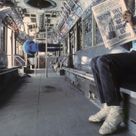
group walked by dirt hustlin his crew's CD to BART passengers, all the while keeping a watchful eye out for the BART police, who not only frown upon any business being conducted on BART, but will arrest perpetrators for doing so. Over the years I have seen Bay Area hip hop artists sell their CDs or cassettes at various public places. In bygone years, members of Hobo Junction or Mystik Journeymen and their extended Living Legends crew would often be found on Durant or Telegraph (outside Amoba) selling their cassettes. But selling on the BART train was a novel approach to hip-hop marketing or distribution that I had not witnessed before. Hence I was anxious to find out more about it so I recently caught up with the V.E.R.A. Clique member Mascen Apollo to ask him about slinging hi
p-hop on BART.
that make it impossible to travel across town - much less across the bay. I mean, damn, maybe if we had something more like the Paris Metro instead of the wallet-breaking Bart (see
then meant pure magic like Gladys Knight & The Pips. But it was my brothers' voluminous collection of vinyl records that brought me above what was easily found on the radios. Lest I forget, I am eternally grateful to my beautiful sister Jill who introduced me to the B-52's when I was 11, and my brother Scott who brou