This blog entry's focus is the Northeast Los Angeles neighborhood of Highland Park. To vote for more Los Angeles neighborhoods to be the subject of future entries, vote here. To vote for Los Angeles County communities, vote here. To vote for Orange County communities, vote here. Please vote for as many as interest you!

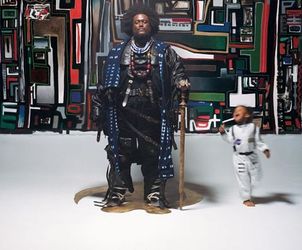
Roberto Reies Flores' Highland Park Tongva mural - The People of the Earth
EARLY ARROYO HISTORY
The Chumash lived in the region over 10,000 years ago before moving further north as the Hahamog'na branch Tongva arrived from the south. For tens of thousands of years the landscape was predominantly rolling hills and grasslands with wild grapes, clematis, sycamore, California live oak, willows and black walnut trees growing along the Arroyo Seco, a seasonally dry creek fed by springs.

The many springs in the area allowed for the establishment of Sparkling Artesian Water (later Sparkletts) in 1925, Yosemite in 1926, Indian Head Water in 1928 and Deep Rock Water.

Figueroa and (New) York Blvd intersection in the 1880s
EARLY HIGHLAND PARK
In 1885, the Los Angeles and San Gabriel Railroad built the first wooden trestle bridge across the Arroyo Seco where Avenue 64 crosses the Arroyo Seco Parkway. The following year, the Pasadena Street Railroad established a horse-drawn trolley line through the area. The same year, 1886, Judson and Morgan named their land The Highland Park Tract. The following year, William Lees Judson and his three sons established t he Colonial Glass Company. Development followed, although by 1888, the land boom had gone bust. Nonetheless, Highland Park was largely spared and Sycamore Grove was annexed in 1895. Garvanza was annexed in 1899. Today, they, along with districts like York Valley are more often viewed as subdistricts of Highland Park rather than separate communities, although all have very distinct atmosphere.

The California Cycleway
BIKES
The area early on began to attract bohemians and bandits, resulting in brothels and saloons springing up around Sycamore Grove. In 1897, a bicycle tollway, the California Cycleway opened, connecting Pasadena to Los Angeles. (Highland Park's cycle-loving spirit continues with the Bike Oven, the Eastside Bike Club, the Arroyo Seco bike bath and the ArroyoFest Freeway Walk and Bike Ride, which in 2003 closed the 110 freeway to cars for one night.)

El Alisal
EL ALISAL
In 1898, Charles Fletcher Lummis began constructing his home, El Alisal, in Highland Park. Lummis had in 1885 walked from Chillicothe, Ohio across the west, publishing his account in 1892 as A Tramp Across the Continent. Lummis was notorious for his love of parties and the "noises" he threw attracted such high profile figures as environmentalist John Muir and Theodore Roosevelt. In 1896, he founded the West Coast's first historic preservation society, the California Landmarks Club. He was also fascinated with America's indigenous people and in 1907 founded the Southwest Museum of the American Indian in adjacent Mt. Washington, Los Angeles' first museum.


SYCAMORE GROVE PARK
The day after Sycamore Grove became part of Highland Park, the sporting clubs in the area were razed and the land became a park. Sycamore Grove Park was dedicated in 1905. By 1910 it was a popular filming location. In 1922, Hiner began conducting bands at the Sousa-Hiner Bandshell. Each of the yearly State Picnics held there was dedicated to a state back east where Highland Park residents had immigrated from. The heyday of the park was in the 1920s and ’30s. They had Sycamore Grove Days and the annual celebration of the Wigwam Club. There was also a pond and stream fed by the Arroyo Seco that was covered in the 1930s as flood control.

Since the founding of the Colonial Glass Company, Highland Park has been known for its art scene. In 1906, the Painters' Cub was established by locals artists and included members of the Garvanza Circle: Elmer Wachte, Fernand Lungren, Granville Redmond, Hanson Puthuff and Maynard Dixon. The Arroyo Guild of Craftsman was established in 1909. Today, its artistic reputation remains, in part due to Avenue 50 Studio, Future Studio, Mor York Gallery, the Judson Studio, Kristi Engle Gallery, Monte Vista, Outpost for Contemporary Art, Rock Rose Art Gallery and THIS Gallery.


EXODUS
The Highland Park Hebrew School Association began there in 1923 and built the Spanish Colonial Revival Temple Beth Israel of Highland Park and Echo Park in 1930. Today it is the second oldest synagogue in Los Angeles still operating (after the Wilshire Boulevard Temple in Midtown's Wilshire Center neighborhood).

THE 110 & THE EXODUS CONTINUES
By the middle of the 1960s, the population was largely Latino. By the mid 1970s, it was overwhelmingly so, although it never homogenized to the degree that most of the Eastside did. Some of the population always had a healthy respect for the neighborhood's historic importance and in 1984, large tracts of the district were set aside for historic preservation under Los Angeles' pioneering Historic Preservation Overlay Zone ordinance (the same year that Forever 21 was founded in Highland Park). Today, Highland Park's ethnic and racial make-up is roughly 72% Latino (mostly Mexican and Salvadoran), 11% Asian, and 11% white (mostly Germanic).


****
Thank you to my traveling companions Autumn Rooney and Maryam Hosseinzadeh on this blogventure. Your knowledge and company were invaluable!
Relevant Tags
Northeast Los Angeles (5), Arroyo Seco (3), Hispanic Heritage Month (31), Tongva (11), Season 4 (29), Chumash (3), Silent Film (18), John Philip Sousa (1), Highland Park (5), Nela (3), 1890s (10)Recent Posts From Eric Brightwell
Comments
Oh, my goodness!! How could you leave out two of Highland Park's "crown jewels"??? The beautiful DEBS REGIONAL PARK, two hundred and eighty two acres of natural habitat with its native plants and animals. It is also the home of the very wonderful 16M dollar Audubon Nature Center which is about five years old now. The Audubon Center promotes activities for the whole family on a monthly basis as well as offering classes for the students from all over LA. The entrance to the Audubon Center is off of Griffin Avenue, across from and above the Montecito Heights recreation Center. DEBS PARK offers five hiking trails with numerous animals, a beautiful lake with a gorgeous views of downtown LA and the Arroyo! The main entrance is located just off of Monterrey Road, south of Via Marisol. (Both DEBS PARK and the AUDUBON NATURE CENTER are within the boundaries of the Historic Highland Park Neighborhood Council. They are shared resources with other NC's, as well.
On behalf of the Highland Park Historic Trust:
The information for the theater is for the one in Highland Park, IL. I have pasted the email address below. I do not know how to create an active link.
http://cinematreasures.org/theater/1921/
@THE TRUTH - I'm afraid, due to your lack of coherence, that I'm not sure what point you're trying to make. I'm a honest to a fault, if anything. As for not daring to "say it," I haven't the foggiest idea what you're talking about and can only assume you're a troll.
@Pat Griffith - How embarrassing! I've made the corrections. I'm pleased that our Highland Park Theater has a more interesting story than Illinois's!
@Nancy Wyatt
Ernest E. Debbs is in neighboring Montecito Heights, not Highland Park. I have'nt, I'm sorry to say, ever been there. However, if Montecito Heights rises in the rankings (it's currently tied with many neighborhoods for fourth place) then I will make certain to check it out. If you haven't voted for neighborhoods, please do!
orale vatos and vatas if your firme with me ill be firme with you - El Paco from Barrio Highland Parque 13 Ganga -Que No??


Highland Park, has gone to the DOGS. How honest can YOU be!!! WHY?? You can think it, but DON'T YOU DARE SAY IT!!