Amoeblog

November is Native American Heritage Month

in which products available on DVD are discussed
Native Americans from across the Americas

The first American Indian Day was celebrated in May 1916 in New York. Back in 1990, President George H.W. Bush named November National American Indian Heritage Month. The purpose of the observance is to highlight the roles America's aboriginal peoples have played in the country's history. It's kind of interesting. I'd say that the main role Natives have played in regard to American history was armed resistance and reluctant subjugation. It's kind of like Israel having a National Palestinian Heritage Month, Turkey having an Armenian History Month or Sudan having a Darfur Day but whatevs. I suppose, somewhat begrudgingly, that most Natives today have come to accept the fact that America is here to stay ...at least until 2012. Furthermore, Natives have, in many cases, actually been supportive of America and contributed to her history, to be sure. For example, not only did many Native nations align themselves with the US and its colonial antecedents at various times, but they also served as really good trackers and proved to be natural ecologists who demonstrated their intrinsically environmentalist natures by using every part of the bison and coming up with 30 different names for snow.

Native Bison hunt         Inuit with Snow Shoes
                    Don't worry, I will use every part of you                                     Hmm... what kind of snow is this?

Now, one thing I don't get is why we're supposed to differentiate the hemisphere's various indigenous people along the present day lines of colonial-imposed boundaries. For example, why are the Uto-Aztecan-speaking Comanche and Hopi lumped in with Alaska's Aleuts and separated from their Uto-Aztecan cousins, the Aztecs, just because the latter chose to cross a then-non-existent border? It gets especially confusing when you realize that there are/were various people like the
Míkmaq, Inuit, Lingít, Niitsítapi, Cree, Algonquin, Kanienkeh, Blackfoot, Tohono O'odham and many others who lived on both sides of the future U.S.'s borders as if they weren't even there (namely, because they weren't). Though far from hegemonic, to distinguish between Canada's "First Nations" or "Aboriginal Peoples," the U.S.'s "Native American" or "American Indian" population and Latin America's "Indios" or "Pueblos Indígenas" along the lines of their colonial destructors is not only nonsensical but ignorant, at the very least, and possibly a bit racialist.


Clearly, since the presence of Mounties indicates that this is Canada, these can't be Native Americans, right?

Anyway, though the stated aim of Native American Heritage Month is to honor contributions only of the U.S.'s indigenous peoples (you know, the usual Sakajewa, Pocahontas and the Navajo Code Talkers stuff), it's not going to stop me from addressing the contributions and existence of non-U.S. Natives from the blogversation as if there's some kind of pan-Native solidarity.


Remaining Native Lands

Many Moons

Carlisle American Indian Boarding School   
so happy to be civilized

When the U.S.A.'s history began, the country's initial policies toward Natives were either extermination or "civilization" (i.e. forcing them to adopt their conqueror's customs). Civilization occurred in special schools where Christian missionaries sexually, physically and mentally abused children and attempted to force them to abandon their cultural traditions under threat of severe punishment.

No Beer sold to Indians
So, you're citizens now. Well, you still don't have the right to have a beer! Go ahead and have some whiskey though.

It was only in 1924 that all Natives were granted U.S. citizenship in the Indian Citizenship Act. There had been citizenship granted earlier, however, to some Natives. In 1831, the Choctaw became the first non-white people to be allowed status as Americans.

Natvie American Soldiers in World War II
Good lookin' out, Chief!

About 44,000 Native Americans fought for the US in World War II. They fought alongside other Americans who called them, affectionately and patronizingly, "chief," a practice continued to this day by brohams throughout the nation.

AIM at Wounded Knee
Indians squatting on dawn's highway...

In 1973, at Wounded Knee, South Dakota, Frank Clearwater and Lawrence Lamont - two members of the American Indian Movement (AIM) - were shot and killed by US Marshals.

In 1975, two FBI agents were killed at the Pine Ridge Indian Reservation shooutout. As the result of a trial (one wherein the fairness of proceedings have raised widespread concern), activist Leonard Peltier was  sentenced to life in prison.

In 2005, Massachusetts repealed their 330 year-old law banning Natives from entering Boston. I assume this had something to do with that tea party that got out-of-control.

  Still from "The Exiles"

Angeleno Natives from the documentary "The Exiles"

Today, most Natives live in California, followed by Arizona and Oklahoma. 8 out of 10 Natives are now of mixed ancestry, sometimes known as "Metis." These figures don't include Mestizos, who are just as Native-descended as Metis, but not included due to aforementioned false distinctions between Natives north and south of the U.S.-Mexican border. This is also despite the fact that over 80% of the Mexican-American population have Native ancestry. Due, I suppose, to deeply the ingrained tradition of Spanish racism, it often seems that most Latinos are in denial of their Native ancestry. Conversely, nearly every non-Latino white person in the U.S. claims to be "part Cherokee."  Still, even without counting Latin America's indigenous and mestizo immigrant populations, Los Angeles is home to the largest Native population in the U.S.A.

A partial list of Natives in the entertainment industry

Whether in Colonial frontier tales or Wild West narratives, Natives have long been central to American entertainment. In film, actual Natives were usually relegated to roles as extras, with white actors playing the main roles. Did you watch that ad above with the Sicilian guy in buckskin threads rowing a boat in New York and then crying at the sight of litter and think, "This must be a PSA about schizophrenia or something?" Apparently it wasn't meant to be about mental illness. The actor [the Native-sounding "Iron Eyes Cody" (né Espera de Corti)] was merely part of a long and continuing tradition of redface, wherein white actors stereotypically portrayed most Natives quite often until pretty recently -- although it still happens a lot more even today than, say, blackface.

Redface

In most American film, non-Native (usually white, Latino or Asian) actors played Natives as bloodthirsty, unreasoning barbarians whose demise was glorified. Actors in redface depicted Natives as droopy nosed stoics capable only of speaking English in broken, halting fortune cookie-isms. Iron Eyes Cody even adopted a Native kid (Robert Tree Cody) and chanted on Joni Mitchell's "Lakota."  Lithuanian/Tatar Charles Bronson often passed for believably Native -- at least for a movie-going public almost completely unaware of what Natives actually look like.

Tell truth. You not know we white man.

Even when somewhat sympathetic to Natives, white people were still almost always cast as the leads, the Caucasian appearance usually attributed to their being "halfbreeds." The Last of the Mohicans (1920), Hawkeye and the Last of the Mohicans, F-Troop, Iron Eyes Cody's entire career, Broken Arrow, Kings of the Sun, Navajo Joe (Burt Reynolds is a quarter Cherokee), Captain Apache, I Will Fight No More Forever, Sitting Bull, Commanche, Chato's Land, White Comanche, Comanche and Gregg Henry in Body Double all feature white actors playing Native characters.

Redface and negative portrayals of Natives occurred almost unchecked until AIM started staging protests in front of theaters showing anti-Native films. Their efforts (along with revisionist western filmmakers using the genre to subversively attack the war in Vietnam and address civil rights) helped put an end to the universal glamorization of the Native American holocaust.

Real Native American Film history began in the 1970s, when a duo of anthropologists taught a group of Navajo how to shoot their own films, which resulted in the series of seven documentaries that make up Through Navajo Eyes (1972).

Down with the Reds

Nowadays, Natives primarily serve as local color (e.g. Twin Peaks or Northern Exposure) and authenticity-conferers to white people whom they recognize something special in. To this day, Hollywood is still completely incapable or unwilling to attempt to tell a story purely from a Native perspective. Instead, the protagonist is invariably a white guy who earns (like Jane Godall with her chimps or Diane Fossey with her Gorillas) the trust of the noble savages and whose ultimate acceptance of the protaganist serves to exonerate the film's entire audience from racism or exotification and confer on them the status of being down and maybe even slightly mystical.

So, whilst no longer hateful in their portrayal of Natives, now you've got films centered around Natives with white people so down with Natives that the stories are really about them, part of the larger "Through Blue Eyes" genre which includes work like Amistad, Schindler's List (Spielberg is an auteur of the genre), Glory, the Last Samurai, Tarzan, Ghosts of Mississippi, Mississippi Burning &c.

Sting and the Kayapo
Sycamores - white on the outside, red on the inside

Through Blue Eyes films that deal with Natives include Run of the Arrow (and its un-credited remake, Dances With Wolves), Little Big Man, A Man Called Horse (and Return of a Man Called Horse), The Missing, The New World, Last of the Mohicans, Black Robe, The Mission, Cabeza de Vaca, Thunderheart, Geronimo, Pocahontas, Aguirre Wrath of God, Pathfinder, At Play in the Fields of the Lord, The Emerald Forest, The Light in the Forest. Don't get me wrong, a few of those films are amazing, even favorites. It's just sad that Hollywood won't make a film about Natives which doesn't at least squeeze weddos in somewhere. Even Apocalypto, which was concerned enough with accuracy to be filmed in Mayan, ended with a shot of Spaniards heading for shore, even though their arrival came hundreds of years after the Mayan Civilization had collapsed.

Speaking of Reds - Red Westerns, Osterns and Sauerkraut Westerns

Roughly at the same time that America started producing Revisionist Westerns, which often looked critically at the mythologization of the Western narrative and the widespread demonization of Natives, the Eastern Bloc produced so-called Osterns, or Red Westerns. Some (mainly Soviet) merely transplanted Western iconography to a different locale (usually the steppes). Others parodied American Western stereotypes such as Czechoslovakia's Lemonade Joe, the USSR's The Man from the Boulevard des Capucines or the DDR's The Oil, the Baby and the Transylvannians. But most interesting for their portrayal of Natives were the "sauerkraut westerns" made by East Germany's DEFA studios, which cast Native characters against Americans in a propagandic attack on Western capitalism and corruption.

apachesSons of Great Bear

Native Cinema

Whether Native-made or merely Native-centric, more and more filmmakers are making films with strong, positive or nuanced portrayals of Native Americans, almost exclusively outside of the Hollywood system.


In 1914, Edward S. Curtis made In the Land of the Headhunters. The cast was entirely made up of Kwakwaka'wakw and, as such, was the first film cast to be entirely Native. The film, though not marketed as a documentary, attempted to accurately portray Kwakwaka'wakw customs. As with all Curtis' depictions of Natives, however, anachronism were portrayed as aspects of modern Kwakwaka'wakw life.


In 1922, Robert Flaherty made the similar Nanook of the North with an entirely Inuit cast. As with Curtis, Flaherty staged scenes and attempted to present vanished customs as still being practiced, including Nanook (in fact named Allakariallak and only accustomed to hunting with guns) ice fishing with a spear. Unlike Curtis, Flaherty successfully passed it off as a documentary and most people erroneously accept it as such.


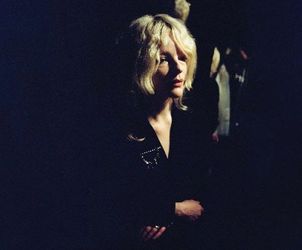
The Exiles, a documentary made by British filmmaker Kent MacKenzie, was one of the first times Natives had been shown as living in the present, not vanished in the mists of time. It documents Natives who left reservation life to live in Los Angeles's Bunker Hill neighborhood in the 1950s. Although I haven't seen it, it looks really amazing, huh?


Yawar Malku (1969) is a damning attack on American cultural imperialism. The story concerns American Progress Corps (i.e. Peace Corps) volunteers who, reportedly, sterilized the Quechua in an effort to shrink their impoverished population. In the film, the Quechua get wise and deal with the antagonists. Director Jorge Sanjinés followed it up with several militant films about Natives.

Consider these other Native Cinema films:

Chacdance me outsideatanarjuat


La Otra ConquestaPow Wow Highway
Shadow LakeBlack Cloud

  Bury My Heart at Wounded Knee Business of Fancydancing
Christmas in the CloudsCoyote Waits


Dark WindDreamkeeper
Four SheetsEdge of America


Johnny GreyeyesLast of His Tribe
Sioux CitySkins


SkinwalkersSmoke Signals
Song of HiawathaSpirit Rider


Squanto Thief of Time     Naturally Native          doeboy


    The Exiles Native Americans in Los Angeles Poster DVD

Not Pictured - Honey Moccasin, On and Off the Res and Harold of Orange.

Posted by Eric Brightwell on November 5, 2008 at 07:19pm | Comments (5)

Relevant Tags

Native American Cinema (2), Redface (1), Dvds (29), Movies (33), Film (25), Observances (2), Native American Heritage Month (1), Native Americans (3), Native America (3)

Comments

On my grandfather's tombstone it says: Alex "Chief" Marquez. He fought in the second big war and grew up on a reservation. Not in that order. Take into account that my family history is littered with magical realism (it's because we're named Marquez), so a few grains of salt must be taken.

Posted by javi on November 14, 2008 at 09:31pm

You have incorrect information listed above. Leonard Peltier was not sentenced to life imprisonment for anything having to do with the Wounded Knee occupation, but being convicted for the execution of two FBI agents on the Pine Ridge Reservation subsequent to the occupation.

Posted by David on September 30, 2009 at 07:02am

@David. Thanks for the correction. Duly noted. And I added the Exiles to the Native movies at the end... it's finally getting DVD release in this coming Native American Heritage Month, on 11/17/2009

Posted by Eric on September 30, 2009 at 10:21am

You're a little off on the proclamation of Native American History Month- G.W. Bush proclaimed the month in 1990 (see Bureau of Indian Affairs).

Also, I am wondering why you claim most Indians are living in California, Arizona and Oklahoma. You missed North Carolina altogether, home to some 55,000 members of the Lumbee Indian Tribe- the largest tribe east of the Mississippi. That number does not even include the other tribes recognized by North Carolina. This is important to note because some of us fought- and won- to stay on our land, as recent as the 1958. One needs only to refer to the revolt against the KKK by the Lumbee (see The Battle of Hayes Pond).

No disrespect meant by the corrections. Thank you for highlighting the movies.

Posted by Holly on November 9, 2009 at 06:32pm

@Holly: North Carolina does have a significant population of Natives but according to the last census, "States with the largest American Indian populations are: California, Oklahoma, Arizona, and New Mexico." I did correct the dates about the first observances however, thanks.

Posted by Eric on November 9, 2009 at 08:29pm

Post a Comment

******