Credits
Dig-Deeper
Users Also Bought
-
 Once Twice Melody [Silver Edition] (LP)
Beach House Acoustic Hymns, Vol. 1 [Turquoise Vinyl] (LP)
Richard Ashcroft Traveller (CD)
Chris Stapleton
Artist Releases
-
 Live At Rockpalast (CD)
John Cale Words For The Dying [Clear Vinyl] (LP)
John Cale Mercy (LP)
John Cale
Mercy (CD)
John Cale -
Mercy [Violet Vinyl] (LP)
John Cale Songs For Drella [Record Store Day] (LP)
John Cale

-
 Church Of Anthrax [180 Gram Vinyl] (LP)
John Cale June 1, 1974 (LP)
John Cale Vintage Violence (LP)
John Cale

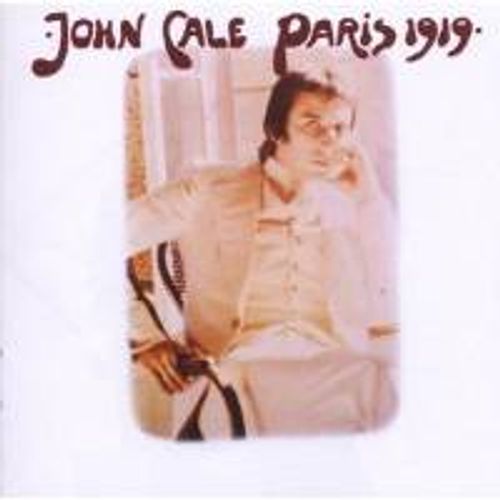
Paris 1919 (CD)
John Cale

$13.98
Track Listing
Disc 1 Titles |
Artist |
Length |
|---|---|---|
|
1.
Child's Christmas in Wales
|
John Cale | 03:20 |
|
2.
Hanky Panky Nohow
|
John Cale | 02:46 |
|
3.
The Endless Plain of Fortune
|
John Cale | 04:12 |
|
4.
Andalucia
|
John Cale | 03:54 |
|
5.
Macbeth
|
John Cale | 03:06 |
|
6.
Paris 1919
|
John Cale | 04:06 |
|
7.
Graham Greene
|
John Cale | 03:00 |
|
8.
Half Past France
|
John Cale | 04:19 |
|
9.
Antarctica Starts Here
|
John Cale | 03:00 |
Disc 2 Titles |
Artist |
Length |
|---|---|---|
|
1.
Burned out Affair [Outtake]
|
John Cale | 03:24 |
|
2.
Child's Christmas in Wales [Alternate Version]
|
John Cale | 03:30 |
|
3.
Hanky Panky Nohow [Drone Mix]
|
John Cale | 02:51 |
|
4.
The Endless Plain of Fortune [Alternate Version]
|
John Cale | 04:08 |
|
5.
Andalucia [Rehearsal]
|
John Cale | 04:34 |
|
6.
Macbeth [Alternate Version]
|
John Cale | 03:34 |
|
7.
Paris 1919 [String Mix]
|
John Cale | 04:29 |
|
8.
Graham Greene [Rehearsal]
|
John Cale | 01:40 |
|
9.
Half Past France [Alternate Version]
|
John Cale | 04:50 |
|
10.
Antarctica Starts Here [Rehearsal]
|
John Cale | 02:52 |
|
11.
Paris 1919 [Piano Mix]
|
John Cale | 06:09 |
|
12.
Macbeth [Instrumental]
|
John Cale | 05:17 |
$13.98
SHIPS FREE in U.S.