Movies We Like
Handpicked By The Amoeba Staff
Films selected and reviewed by discerning movie buffs, television junkies, and documentary diehards (a.k.a. our staff).


Afghan Star
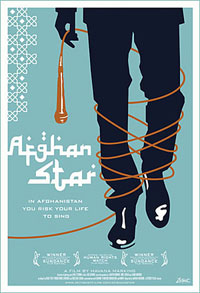 Who would have guessed that an American Idol type of singing competition show could bring enlightenment, democracy and change to a nation? Of course not in the U.S. - our version only inspires cruelty and insipid syrupy belted versions of stale Whitney Houston songs. But in Afghanistan, their version of the show, Afghan Star, may just be dragging a country that has been plagued by decades of wars, poverty and tribal fighting into the twentieth century where everyone believes that becoming famous is the goal of life.
Directed by Havana Marking, the documentary Afghan Star is the most fascinating peak into Middle Eastern media since Control Room five years earlier. Here we follow four contestants, each with different ethnicities from different parts of the country who risk their lives to sing on television. If you think the divisions of the States or regions in U.S. can be tense, Afghanistan's animosity between neighbors keeps the country constantly on the brink of a mini-civil war. But after years of Taliban repression (where television and singing were banned) and still a strong conservative Muslim arm in the country, the contestants and the show’s producer/host Daoud Sediqi are convinced that what their country needs is music and they are eager to give it. Even having a woman sing on TV is still considered radical and leads to a number of dangerous incidents which are well covered in the documentary. The film also does a great job of humanizing the Afghan people who show that no matter how dire the country seems to be, the contestants and the show's audience (at least a third of the country are regular watchers) are still so full of hope. On Afghan Star the theme songs from The Sound Of Music and Footloose are still alive, playing out with life and death consequences.
The Long Good Friday
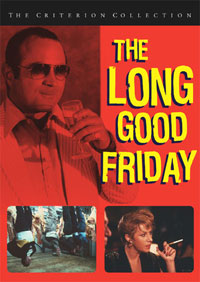 The DVD box has a blurb from an old review that compares it to The Godfather, but in all actuality the very British pulp gangster flick The Long Good Friday is much closer in spirit to TV’s The Sopranos. Matter of fact, it’s fair to say that The Sopranos is a direct descendent of this crime and politics saga. Bob Hoskins, in a brilliant, star-making performance, carries the film as Harold Shand and, like Tony Soprano, he’s a two-bit street punk who has worked himself up the criminal food chain; instead of New Jersey he runs London. Like Tony, Harold fancies himself an ambitious businessman. He thinks the gaudy opulence he surrounds himself with gives him class and makes him legitimate. Also like the TV show, his wife plays a key role in his life - she’s almost a First Lady of the underworld. Unlike Tony, Harold seems to be devoted to his wife Victoria (played by the great Helen Mirren, just hitting her stride in her important run of great film and TV roles). She seems to be a little more posh than him and like his fancy boat, helps him feel like he’s arrived. Harold also has a crew of devoted lieutenants, the younger ones treat him like a father figure. Although maybe what makes these husky, bearish gangsters resemble each other most is the complicated rage that they desperately try to control. Even when they know revealing their true sociopathic nature can be bad for business, they just can’t help themselves.
With The Long Good Friday, British television director John Mackenzie, on a very modest budget, inexplicably made probably the best English gangster film ever. Inexplicable because though the guy continued to work in film and TV for decades he never made anything else of note. Nor did screenwriter Barrie Keeffe, who also came from the small screen, and who, after the acclaim for The Long Good Friday, never had another screenplay produced (he went back to TV). These two guys, along with the strong collaboration from Hoskins (who also came from TV at the time), would create such a special little gem that would help usher in a mini resurgence in home grown independent British film in the '80s (British film meaning paid for by the pound, not the dollar).
Creepshow 2
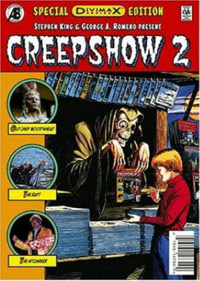 Most genre fans seem to cite the original Creepshow as the definitive and best horror anthology film ever made, but I’ve always had more of a soft spot and appreciation for its sequel Creepshow 2. The first Creepshow was the brainchild of famed horror author Stephen King (Carrie, Christine, Cujo, The Shining, It, The Dead Zone) and legendary horror director George A. Romero, the creator of Night Of The Living Dead and in essence the father of the movie version of the modern “zombie.” Their idea was to put together a live action anthology film which collected five unique horrific tales ala the old EC comics of the 1950s which featured Tales From The Crypt, The Vault Of Horror and The Haunt Of Fear. (Side-note: EC comics were also the creators of MAD magazine!) The segments drew in an all star cast including names such as Ed Harris, Leslie Nielson, Adrienne Barbeau and even King himself. While considered a sleeper hit at the box office upon its release, it would take five years before the sequel came to fruition.
For Creepshow 2, King provided the stories and Romero penned the script, but this time he vacated the director’s chair for Michael Gornick, Romero’s long-time cinematographer. Also, whereas the first film featured five separate segments and clocked in at 120 minutes, the sequel keeps a lean pace of three stories (plus an animated wrap around) all within 90 minutes. Famed FX artist Tom Savini (also a long-time Romero collaborator) portrays the live action version of “The Creep” during the prologue segment. Without further ado, here’s a break down of the three fiendish tales!
The Cotton Club
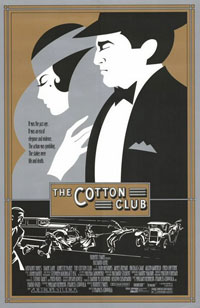 Playing like a cross between Once Upon a Time in America and Purple Rain, with a script by Francis Ford Coppola and the great Albany novelist William Kennedy (author of the depressing Depression classic Ironweed), based on a story the two concocted with The Godfather author himself Mario Puzo, director Coppola’s gangster/Jazz epic The Cotton Club surprisingly fits in less with his Godfather saga, but stands up perfectly with his “experiments in style” phase he’s worked on ever since burning-out after his masterpiece Apocalypse Now in ’79. While The Cotton Club’s two beautiful leads, Richard Gere and Diane Lane, are only able to deliver two-dimensional performances, luckily the brilliant supporting cast (led by the wonderful long-time character bad-guy actor James Remar) manages to bring a third dimension to the acting, helping to keep the film more than watchable. Aside from the acting, gorgeous cinematography, and production design from big names in their fields, cameraman Stephen Goldblatt (The Hunger) and superstar set designer, Richard Sylbert (The Graduate, Chinatown, Rosemary’s Baby, etc.), is the music and musical performances led by tap-man extraordinaire Gregory Hines (History of the World: Part 1) and a number of outstanding re-creations of the era's legends including Duke Ellington and Cab Calloway. The Cotton Club’s production history was mired by nightmares and legal problems (ranging from drug issues to murder) which may explain why the final product may feel a little cluttered or chaotic, but that said, it still holds up as a damn fascinating piece of entertainment.
The massive plot goes something like this... Harlem 1928, hipster clarinetist Dixie Dwyer (Gere), hopes to get hired on at the legendary Cotton Club, but after accidentally saving the life of tough guy gangster Dutch Schultz (Remar), he becomes his boy, appreciated but under his control. Things get dangerous when he falls for Dutch’s girlfriend, Vera (Lane), and they carry on an affair behind his back. Cotton Club owner Owney Madden (Bob Hoskins) and his boyfriend Frenchy Demange (Fred Gwynne AKA Herman Munster) are above Dutch on the underworld food chain, they try to keep him under control but he proves just too psychotic to manage. Meanwhile a black gangster, Bumpy Rhodes (Laurence Fishburne), tries to make an inroad on Harlem’s white controlled crime scene as does Dixie’s ambitious trigger happy little brother Vincent (Nicolas Cage). The battle for the soul of Harlem all leads to lots of gun play and violence between black, Jewish, Irish and Italian gangsters.
Frankenhooker
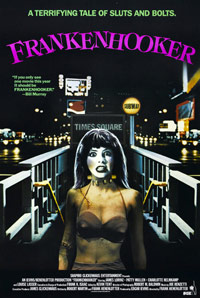 Growing up, Frank Henenlotter was always one of my filmmaking heroes and it’s not just because he made the cult classic films Basket Case and Brain Damage. It was mainly because, like me, he was originally from Long Island, New York. In fact, I recall my best friend’s mother worked with Frank’s brother at the same police precinct and for whatever strange reason, this made my friends and I feel like he was the first director that we were two steps away from rather than someone we’d imagined being in the far away land of Hollywood. It proved to us you can make movies in New York and be someone from Long Island to make them too.
So it’s funny how Frankenhooker, which would end up being my favorite of his films, was actually the last one I discovered. How I managed to go years without seeing it is completely beyond me, especially with the now legendary Bill Murray quote right on the front of the box stating “If you only see one movie this year it should be Frankenhooker.” Also, despite it’s location being set in New Jersey (in actuality, it’s Valley Stream), it’s arguably the most “Long Island” movie I’ve ever seen, at least in terms of reminding me what it was like growing up there in the late '80s/early '90s. For all of the above reasons I hold a special place in my heart for Frankenhooker.
Capricorn One
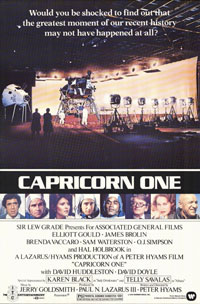 How's this for an all-star 1970s line-up? Capricorn One is a kinda sci-fi, conspiracy minded, political-thriller written and directed by Peter Hyams (Peeper, Outland and the similarly themed The Star Chamber) starring the once popular Elliott Gould as a pesky reporter (as if his Philip Marlowe from Robert Altman’s The Long Goodbye wanted to grow up to be Woodward & Bernstein). The three innocent astronauts with their lives on the line are played by the manly James Brolin (Westworld), the nerdy Sam Waterson (The Killing Fields) and ex-football star O.J. Simpson who became famous for... well you know. The astronauts wives include Brenda Vaccaro (Midnight Cowboy) and Denise Nicholas (Blackula). Hal Holbrook (Deep Throat from All The President’s Men) is the conniving government bureaucrat doing his authoritative three-piece-suit thing. Listed and boxed in the credits as special guest stars is the underrated and strangely attractive Karen Black (Five Easy Pieces) and Telly Savalas, taking a break from TV's Kojak. The rest of the cast is rounded out with other TV fixtures from the decade: Robert Walden, David Huddleston and David Doyle (Bosley from Charlie’s Angels). It’s not just the cast or the haircuts that make Capricorn One so beautifully '70s, it's the paranoia that has come to define so much of the work of the decade.
While a script about a manned rocket ride to Mars that may or may not actually happen sounds coincidentally 2012, Capricorn One is all 1978. Following on the heels of political assassinations, the Vietnam war and Nixon’s Watergate scandal, Hollywood was hot for covert government and corporate dirty work, represented with a number of conspiracy driven films as diverse as All The President’s Men, The Conversation, Winter Kills, The Parallax View, Chinatown, Executive Action and Three Days of the Condor. The '70s sci-fi genre into which Capricorn One sorta falls had similar themes with flicks like Westworld, Invasion Of The Body Snatchers and Silent Running. Of course both genres were basically driven out of business the year before Capricorn One was released when Star Wars was unleashed on the world. Along with the success of Rocky, Hollywood was becoming less interested in the cynicism of the past and now looking for heroes for the future (also ending the mega-stardom of an actor like Gould who specialized in rumpled losers.)
The Iron Giant
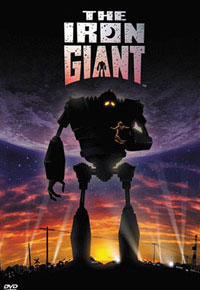 1999 was about as exciting as it gets for feature film animation with such diverse highlights as Walt Disney’s better than expected Tarzan, the jump from TV to the big screen South Park: Bigger, Longer & Uncut, Pixar’s great sequel Toy Story 2, and the American release of Hayao Miyazaki’s Japanese mind-bender Princess Mononoke. Out of nowhere came one of the most unique, stylish and moving animated flicks ever, The Iron Giant, from a Simpsons executive consultant named Bill Bird (who famously would go on to direct two of Pixar’s best, The Incredibles and Ratatouille, and then the live action Mission Impossible - Ghost Protocol).
Taking place in the chilly Cold War year of 1957, The Iron Giant works as both an allegory to America’s heightened paranoia and a stylistic tribute to the imagination those jitters created. It’s sort of a cross between The Russians Are Coming, the Russians Are Coming and E.T.: The Extra Terrestrial (with some Johnny Sokko and His Flying Robot in there too). With a theme of embracing what you don’t understand, it may sound like just another “boy and his giant robot” story, but it’s much richer than a simple pitch and it may just bring a tear to even the most cynical of viewers.
God Bless America
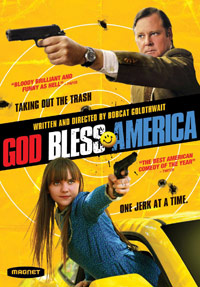 God Bless America is a satirical masterpiece, plain and simple, and it’s not surprising if you look at the trajectory of Bobcat Goldthwait’s films as a writer/director. The former stand-up comedian and star of the Police Academy sequels kicked off his filmmaking career with the often misunderstood and underrated 1991 comedy Shakes The Clown, in which he also starred, but it was his two follow-ups, Sleeping Dogs Lie and World’s Greatest Dad, that solidified him as the master of the black comedy. Those two films represent some of the darkest and most uncomfortable cinematic farces you’re bound to ever see and while he had plenty to say through the characters of those previous movies, God Bless America feels like his most personal rant on the wrongs of our current celebrity obsessed society. All the things he’d probably vent about in a modern stand-up routine are all neatly plugged into his latest feature-length film making this arguably his most personal movie to date.
Joel Murray (reuniting with Bobcat for the first time since his 1986 big-screen debut One Crazy Summer) plays Frank, a genuinely decent person who gets frustrated easily by the stupidity that constantly surrounds him. Take his completely oblivious and inconsiderate neighbors who through paper-thin walls stay up super late to loudly discuss the most asinine subjects while their unattended newborn baby cries in the background nonstop. Between the noise and his migraines, Frank can never get a good night’s sleep. So most evenings he’s plopped on his couch flipping through the channels to catch commercials for “pig fart” ringtones and power drink advertisements in between episodes of reality shows like Tuff Gurlz where one girl throws a used tampon at another girl. (No doubt, an MTV show.) But hey, that’s nothing compared to the news reports he combs through depicting kids doing violent things and then posting them on YouTube, or the angry religious fanatics protesting some social ill of the week.
The Toxic Avenger
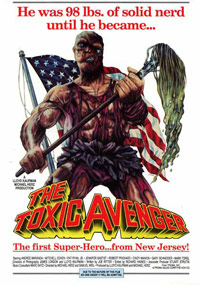 Troma Entertainment has been churning out what can be considered the epitome of “cult” films for over 30 years and has proudly stood tall as the purveyors of independent cinema. But most of their output in those 30 years might be looked upon as lowest common denominator material. To be blunt, the majority of their movies feature some of the most outlandish gags and stories being executed in the poorest of taste with the sole purpose of offending just about anyone and everyone that watches them. Then again, therein lies the charm of a typical Troma film. No other movie among their catalog matches the greatness of The Toxic Avenger, Lloyd Kaufman’s most famous creation which at least manages to be offensive and entertaining.
No one could’ve predicted back in 1984 that this little low-budget indie gore-fest would go on to spawn three sequels, comic books, a television cartoon titled the Toxic Crusaders and a slew of related toys and merchandise. After all, could the world’s first superhero from New Jersey who was born of toxic waste really become that huge of an icon? Low and behold, for better or worse, he has! And that’s part of the fun in revisiting the film now which so perfectly captures the sleaziness of New Jersey/New York of the early '80s.
First Blood
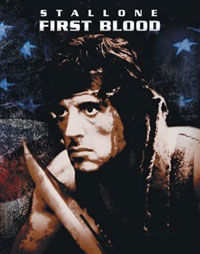 At one point Sylvester Stallone was considered a real actor, bursting into superstardom with the original Rocky flick, becoming a household name and even winning an Oscar for his original screenplay. He would continue to stay popular with its first two sequels, as well as some interesting (though less popular) movies like the quasi Hoffa bio F.I.S.T and the underrated terrorism thriller Nighthawks. He would hit box office gold again in 1982 with an intelligent action flick, First Blood, and though he would go on to become a global brand, First Blood would be more or less the last time he would push himself as an actor (though about once a decade he has managed to pop up in thoughtful, quality non ‘roid roles like Cop Land in ’97 and Rocky Balboa in ’06). Though some of his roles from the '80s have become almost camp classics of bad (Cobra, Tango & Cash), First Blood was about the last time he was able to combine both muscle and a quality script to perfectly suit his oversized ego and release a flick that still holds up today.
Ted Kotcheff was a television director in the '60s, but by the next decade he hit the big screen with a string of fairly popular flicks (The Apprenticeship of Duddy Kravitz, Fun with Dick and Jane and North Dallas Forty). In ’82 he made the little seen but admirable cult deprograming drama Split Image as well as First Blood. It would be his peak both commercially and critically before slowly moving back to TV assignments. Still it's an interesting filmography and important to explain why First Blood works so well. Kotcheff was a character driven director, not an action hack.