Movies We Like
Handpicked By The Amoeba Staff
Films selected and reviewed by discerning movie buffs, television junkies, and documentary diehards (a.k.a. our staff).


Rollerball
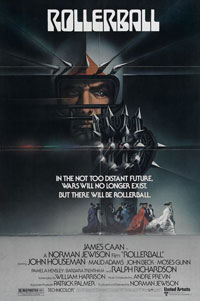 In a bleak, warless future society that stylistically looks a lot like the 1970s, corporations have taken over for governments. But without war the people are still bloodthirsty so they get their kicks from a sport called rollerball, a male version of roller derby, but way more violent and even deadly. Besides guys zipping around a track on roller skates, punching each other out, there are motorcycles too. Worrying that a player can get too popular, corporate head honcho Bartholomew (John Houseman) informs Houston’s star player, the he-man Jonathan E. (played by he-man actor James Caan, a couple years after The Godfather made him a big star), that he needs to retire, but Jonathan E. plays by his own rules and will do what it takes to not be a lackey for the man.
Rollerball director Norman Jewison had a long and respected career moving easily between comedy (The Russians Are Coming, The Russians Are Coming), social drama (In the Heat of the Night) and even musicals (Jesus Christ Superstar), but his work usually had a liberal take to it (A Soldier's Story, ...And Justice for All) and though he was no stranger to straight entertainment (The Thomas Crown Affair) he must have looked a little miscast as a sci-fi action director. Luckily the action is well shot and the rollerball game sequences are still amazingly exciting, but there are only a couple of those games so, at over two hours long, there’s a lot of exposition in between. As a kid, all the talk was boring and confusing, but now I can appreciate what Jewison was driving at. There is definitely a rebellious anti-corporate spirit at work here and a prophetic vision of corporate dominance over sports and everyday life to come.
Being Elmo: A Puppeteer’s Journey
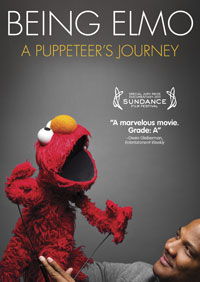 THE CLASH
Kevin Clash grew up in a sizable family of humble means. He began watching Sesame Street as a young boy, which led to watching The Muppet Show. His ravenous interest in creating and performing his own puppet characters grew. He started performing for children at his mother’s day care center, which led him down a path that would ultimately blossom into a promising career as a puppeteer. But not just any puppeteer. He would ultimately become one of children’s most beloved icons, a little red fury monster named… Elmo! Not too shabby for a shy boy from the suburbs of Baltimore.
Spider-Man 2
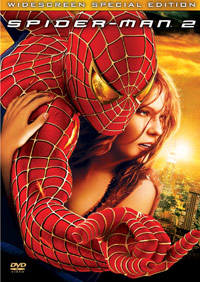 Spider-Man 2 is not only one of the best sequels ever made, it’s easily one of the best superhero movies ever made. And while the first Spider-Man most definitely felt like a Sam Raimi film, this one is 100 percent the filmmaker we’ve come to know and love over the years through films such as the Evil Dead trilogy to Darkman and A Simple Plan. It’s not surprising that his influence is more recognizable in the sequel looking back now in retrospect. The first Spider-Man was a major gamble for everyone involved. For Marvel, for the studio (Sony in this case), hell, even for the toy companies which I’m convinced are the reason the Green Goblin looks the way he does rather than looking like his comic book counterpart in appearance. But the gamble paid off and director Raimi delivered in spades, satisfying not only all the interested parties involved in the first movie’s investments, but savvy comic book fans and worldwide movie-goers alike. So, with the mega-success of the first Spider-Man, it feels like they pretty much left him alone to make the sequel exactly how he wanted to make it.
And the opening alone is impressive and unique. We’re re-told the plot and events of the first Spider-Man during the opening credit montage through a series of amazing drawings by comic artist legend Alex Ross, backed by Danny Elfman’s returning score. Once we’re brought up to speed, we pick up about two years after the events of the last movie and are thrown right into the hectic life of Peter Parker (Tobey McGuire), who is scootering along the busy streets of Manhattan trying to deliver pizzas and avoid being distracted by the multiple billboards featuring the now semi-famous model and his former high school crush, Mary Jane Watson (Kirsten Dunst). It’s the frantic nature of the scene done in trademark Raimi style that shows us what a day in the life of Peter Parker is really like. He’s got 15 minutes to make it across town to deliver a dozen pizzas or else he loses his job. On the way, he encounters every obstacle from New York City traffic to kids playing in the street, in which he makes a quick change into Spider-Man to save them from being mowed down by a speeding truck, to a stoner on the balcony of his posh Manhattan apartment trying to snag a piece of pizza from one of the pies Spidey left there momentarily to make his save. (The stoner dude is a welcome cameo by Evil Dead 2 co-writer Scott Spiegel!)
Halloween: 25 Years Of Terror
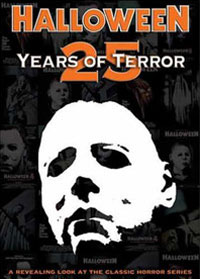 It’s been nearly 10 years since the Halloween Returns To Haddonfield 25th anniversary convention celebrating the release of John Carpenter’s now legendary film took place in Pasadena, California, and I’m sure at the time the organizers couldn’t have possibly predicted that the event would be the impetus for the documentary Halloween: 25 Years Or Terror, nor that that documentary would kick start and pave the way for similar retrospective films on the making-of horror franchise classics. Feature length retrospective documentaries were not anything new at the time of Halloween: 25 Years Of Terror’s release. Filmmaker Laurent Bouzereau was already producing some of the best making-of docs for DVD and Laserdisc releases of famous titles such as Jaws and Psycho; but the Halloween doc was the first to offer a feature length retrospective packaged completely on its own as the disc’s main feature with hours of bonus materials for the die-hard Halloween fans to soak up afterwards. Because of its success, we got a string of other horror documentary releases such as His Name Was Jason, The Psycho Legacy, Never Sleep Again and even More Brains!, a documentary focusing primarily on the first Return Of The Living Dead film! But it’s fascinating to go back and revisit where this particular sub-genre all began, which was with Halloween: 25 Years Of Terror.
While the doc chronicles all the Halloween movies including its sequels in sequential order, it kicks off with the original and sets-up what was going on in the horror genre that led up to it; films like Night Of The Living Dead, The Texas Chainsaw Massacre and most importantly Black Christmas which paved the way for a film like Halloween to exist. A young filmmaker named John Carpenter was tapped by a pair of producers to direct a feature with the premise of “the Babysitter murders” and it was to be set on Halloween, a holiday that not only everyone could identify with since we all recognize it, but also one that hadn’t yet been fully exploited as the title of a movie. Paired with his writing and producing partner Debra Hill, Carpenter agreed to tackle the project as long as he had complete creative control and could have his name above the title. While Debra takes credit for writing the dialogue pertaining primarily to the teenage girls' conversations, she gives credit to John for creating Michael Myers and all the dialogue setting him up as evil incarnate. No one involved could’ve possibly predicted that Halloween would become the most successful and lucrative independent film ever made, maintaining that title for decades up until the release of The Blair Witch Project which came along and snatched the crown.
Strangers on a Train
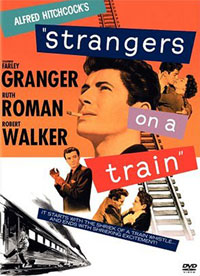 Coming off a string of underwhelming flicks (The Paradine Case, Under Capricorn and Stage Fright), Alfred Hitchcock would kickstart a decade of unparalleled creativity with Strangers on a Train, a nasty little piece of amoral pulp, delightfully mean spirited and loaded with cruel dark humor. This is textbook Hitchcock, full of as many classic set-pieces as any of his films and a must for anyone who wants to learn about the simplicity of creating genuine tension from dynamic camera moves and clever editing. Besides the master director, the other highlight of the film is Robert Walker who gives the performance of his short career as the one of the great conniving psychopaths in film history. Unfortunately not long after the film was completed Walker died, at the age of 32, from an apparent fatal combination of alcohol and prescription drugs. Also of note, any documentary or academic study on the history of homosexuality in film will certainly cite Walker’s character’s obvious closeted sexuality (and maybe for shame because, like many gay characters on the screen back then, his possible homosexuality is linked to his disturbed nature).
The beautifully crafted screenplay is credited to two nobodies (Czenzi Ormonde and Whitfield Cook) and the great crime writer Raymond Chandler (Double Indemnity, The Big Sleep). It was based on a novel by Patricia Highsmith whose series of books about the psycho Tom Ripley was the source for the excellent Hitchcockian French thriller Purple Noon as well as the notable The American Friend and The Talented Mr Ripley. Instead of Ripley, the deadly mind at work here is Bruno Anthony (Walker). When Bruno recognizes a local tennis playing celebrity, Guy Haines (Farley Granger), on an East Coast train, he seems to know everything about the guy. Bruno is fully aware that Guy is stuck in a loveless marriage to the frosty Miriam (Laura Elliott) and wants to get rid of her so he can upgrade to the more beautiful Anne Morton (Ruth Roman), who comes from a respected rich family which could help in Guy’s future prospects. Bruno suggests to Guy, hypothetically, they do “criss-cross murders” - Bruno will bump off Miriam and Guy can kill Bruno’s father for him. Since they don’t know each other, they would never be suspects. Guy excuses himself from the stalker, but for Bruno, maybe this wasn’t hypothetical.
Spider-Man
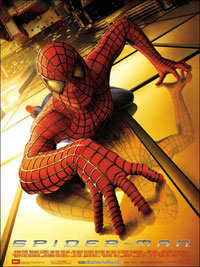 I have a confession to make. Spider-Man is the one movie I’ve seen in theaters more than any other in my life. I’m fairly certain that I caught it eight times in its original theatrical run and the first four times I saw it were all within the first 24 hours of its release. Before you declare me insane, let me explain.
Growing up, Spider-Man was my absolute favorite superhero. Never have I identified with a character as much as I did with Peter Parker; a shy, timid, smart, humble and good-hearted person who always seemed to get the short end of the stick. Then finally he’s granted this incredible power which he immediately takes for granted and that results in something terrible happening to someone near and dear to him. In other words, I learned a lot about morality and the differences between right and wrong from reading Spider-Man. All I ever wished for was a Spider-Man movie. Not surprising, there were in fact several previous attempts previous to bring Marvel’s most famous superhero to the silver screen. At one point, James Cameron, hot off of Terminator 2: Judgment Day and The Abyss, was on track to write and direct a Spider-Man movie, but with an inflating budget and a few radical changes to the source material, that version never materialized. Not too long before that, Canon Films was planning a film with Tobe Hooper at the helm (!), even going as far as creating a sales poster to help secure the financing. That version apparently would’ve sent the wallcrawler on a grand adventure in space, but alas, it never happened and that’s probably for the best.
The Ninth Configuration
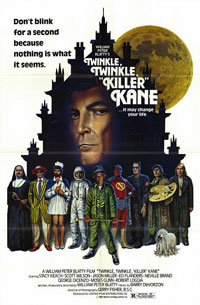 The small list of novelists turned movie directors would include Maya Angelou helming Down in the Delta, Stephen King doing Maximum Overdrive, Thomas McGuane's Ninety-Two in the Shade, Michael Crichton directing half a dozen flicks (including Westworld and Coma), and Paul Auster doing a couple as well. Dalton Trumbo’s adapted his own anti-war novel, Johnny Got His Gun, but by then he was known more as a screenwriter than a novelist. The most famously embarrassing film might be Norman Mailer’s Tough Guys Don’t Dance, while the strangest might be by William Peter Blatty, author of The Exorcist, who also wrote the screenplay (and was credited as a producer on the mega hit). For his directing debut seven years later he would adapt his bizarre, surreal, novel “Twinkle, Twinkle, 'Killer' Kane,” later retitled The Ninth Configuration. The movie was labeled brilliant by a few and a flop by most. While it’s certainty interesting, wildly ambitious and definitely uncommercial, if nothing else, it has the wildest bar room brawl fight scene in movie history, and that makes the whole experience worth the price of admission.
The Ninth Configuration is kind of a cross between One Flew Over the Cuckoo's Nest and MASH (with a little King Of Hearts, Catch 22 and The Ruling Class mixed in). It takes place in a military mental hospital - actually an old castle deep in the mountains of the pacific Northwest - which houses a group of eccentric oddball patients, including an insane astronaut, Billy Cutshaw (Scott Wilson) and other assorted movie quoting, costume wearing, cut-ups (Moses Gunn, Robert Loggia, George DiCenzo and Jason Miller who played Father Karras in The Exorcist). Miller himself was a successful playwright with That Championship Season and he also directed its film version. A new doctor, the ultra intense Col. Vincent Kane (Stacy Keach) arrives to check on the progress of Dr. Fell (Ed Flanders). Through the course of events it becomes clear that Kane is maybe just as crazy as the crazies (and not a Patch Adams kinda fun crazy, relating to his patients with a clown nose, but a deeply violent and dangerous crazy). The film is making a statement about the meaning of insanity. Isn’t war itself more insane than reality (or something like that)? And if that’s not enough there are also religious overtones about the meaning of good and evil. OK, SPOILER ALERT for anyone who can’t see it coming, but yes, we eventually find out that Kane is there for treatment, he is not a doctor but a bad ass psycho marine, and Fell is actually his brother treating him. Reviewing the plot is almost as tedious as the movie itself; what matters is that great bar room scene.
Some Like It Hot
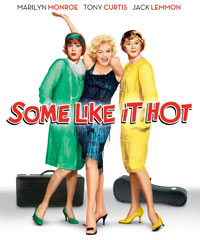 Easily the best drag-comedy ever made, nudging just past Tootsie, Some Like It Hot confirms that Billy Wilder was one of the two greatest directors in America of his generation, alongside fellow non-American born filmmaker Alfred Hitchcock. Besides its ranking as a terrifically entertaining comedy, it also has cultural importance as the best flick Marilyn Monroe had starred in (she only had one scene in the masterpiece All About Eve). Following her earlier collaboration with Wilder, The Seven Year Itch, this film was sold to the public as a Monroe vehicle. She handles the comedy splendidly and oozes sex deliciously (in some outfits that even by today's standards would be considered kinda hootchie), but it’s the rest of the cast that Wilder surrounds her with who make it more than just your average sex farce. Pretty boy Tony Curtis and young funnyman Jack Lemmon (who won an Oscar a few years earlier for Mister Roberts) are exceptional spending a majority of their on-screen time dressed as women. There’s also gangster tough-guy, George Raft (a sorta comeback for him), bizarre super-ham Joe E. Brown (who you could say steals the film), and the great journeyman character actor Pat O’Brien rounding out the cast. Wilder co-wrote the script with I.A.L. Diamond for the second time after Love In The Afternoon and together they create real magic; taking a plot that would be considered a third tier sitcom idea and ended up setting the blueprint for what is now considered a perfect and smart comedy. Wilder and Diamond would go on to collaborate on ten more films together, including The Apartment, but Some Like It Hot is the script that still influences films today (not that Cameron Crowe and others haven’t ripped off The Apartment a number of times).
Opening like a send up of Warner’s black & white gangster films, it’s 1929 Chicago and the town is jumping. At a speakeasy, two musicians, Joe (Curtis) and Jerry (Lemmon), are in a dire financial predicament, especially when their latest gig is broken up by a police raid. Under their nose Detective Mulligan (O’Brien) is busting big time underworld figure Spats Colombo (Raft, back in his full mean gangster persona), which leads to the now famous Saint Valentines’s Day Massacre (where a bunch of gangsters got machine gunned down in cold blood). Unfortunately Joe and Jerry witness it and now have to go on the run. Solving both their financial problems and a way to hide out, they join an all girls band heading to Florida (completely wigged, made-up and dolled out). Now under their new female aliases Josephine and Daphne, they take a long train ride South with their new band, both becoming infatuated with their ditzy new lead singer, Sugar (Monroe). In awe of her sexy, curvy walk and insecure about their new guise, Lemmon declares the obvious, “I tell you, it’s a whole different sex.”
Sleeper
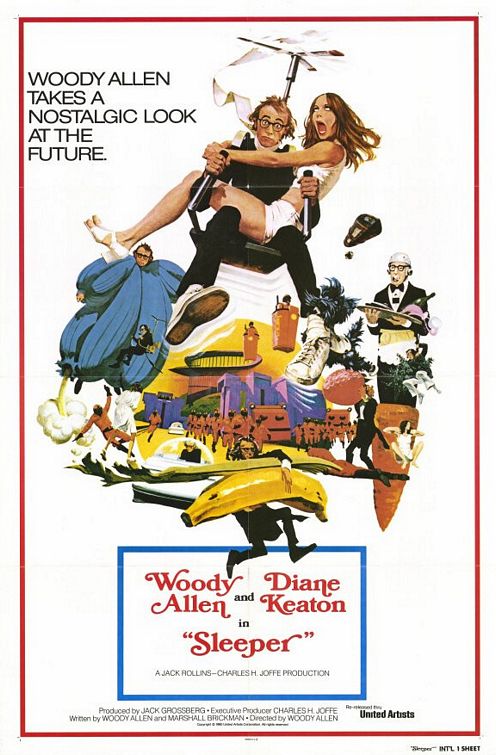 Most films about the future seem optimistic about human intelligence levels rising, with Mike Judge’s depressing comedy Idiocracy being an exception. Woody Allen’s Sleeper splits the difference: the technology and science have evolved but people have gotten shallower. Since ’73 his vision looks to be almost prophetic. As a follow up to Every Thing You Always Wanted to Know about Sex * But Were Afraid to Ask, Sleeper was his most polished film at that point. It was the peak of Woody’s slapstick phase, just four years before his evolutionary jump into the more mature filmmaker he would become with Annie Hall and Manhattan (both films co-written with Marshall Brickman, who also worked on the Sleeper script). Kinda, sorta, slightly based on H.G. Wells’s 1899 novel When the Sleeper Wakes, it’s a film that, because of the science-fiction element and the high laugh count, has always been considered one of his more admired and easily digestible films from his non-fans.
In 1973, Miles Monroe (Allen), owner of the Happy Carrot Health-Food store, is put into a scientific sleep chamber, without his knowledge, and finally revived two-hundred years later in 2173. He wakes up in a futuristic American police state (similar to so many movie future societies from Logan’s Run to Conquest of the Planet of the Apes to The Hunger Games). The rebels need him because he’s the only citizen without an identification number. He ends up helping them by posing as a robot servant for a dingy socialite, Luna Schlosser (Diane Keaton, working with Woody for the second time after Play It Again, Sam. This was the first of seven films she would appear in that he would direct). She lives in a totally pretentious bubble with no clue to the world around her. But after finally revealing his true identity to her, he kidnaps her and they go on the run, fall in love, and she becomes a born-again rebel.
The Running Man
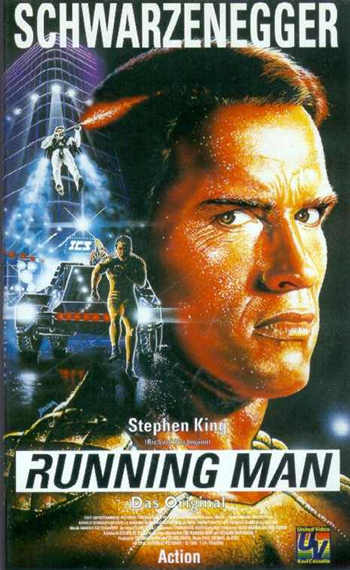 It’s fairly fascinating to read the opening title crawl at the beginning of The Running Man and learn what the state of the world is like in the not-too-distant future. Here’s a portion of it: “By 2017 the world economy has collapsed. Food, natural resources, and oil are in short supply. A police state, divided into paramilitary zones, rules with an iron hand. Television is controlled by the state and a sadistic game show called The Running Man has become the most popular program in history. All art, music, and communications are censored.” Sheesh, for something that’s supposed to happen in about 5 years, it’s not too far off!
We are then introduced to the film’s star, Arnold Schwarzenegger, who plays Ben Richards, a good police officer on a routine helicopter patrol hovering over the streets of Bakersfield where dozens of civilians are in search of food and shelter. He’s ordered by his superiors to open fire on the unarmed crowd and when he refuses, he’s knocked out by his crew and framed for the murder of hundreds of innocents and nicknamed by the press “the Butcher of Bakersfield.” 18 months have passed with Ben incarcerated and after meticulous planning, he teams up with two fellow inmates, Laughlin (Yaphet Kotto) and Weiss (Marvin McIntyre), and makes a daring daylight jailbreak. Ben doesn’t seem to care about clearing his name or Weiss’s plans to meet up with the underground resistance, who plan to take control of the satellite feed that’s been broadcasting propaganda television for years to show the world the truth about what’s been going on with our government. Instead Ben just wants to hook up with his brother and escape out of the States.