Afghan Star
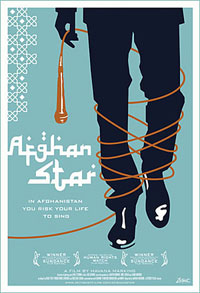 Who would have guessed that an American Idol type of singing competition show could bring enlightenment, democracy and change to a nation? Of course not in the U.S. - our version only inspires cruelty and insipid syrupy belted versions of stale Whitney Houston songs. But in Afghanistan, their version of the show, Afghan Star, may just be dragging a country that has been plagued by decades of wars, poverty and tribal fighting into the twentieth century where everyone believes that becoming famous is the goal of life.
Directed by Havana Marking, the documentary Afghan Star is the most fascinating peak into Middle Eastern media since Control Room five years earlier. Here we follow four contestants, each with different ethnicities from different parts of the country who risk their lives to sing on television. If you think the divisions of the States or regions in U.S. can be tense, Afghanistan's animosity between neighbors keeps the country constantly on the brink of a mini-civil war. But after years of Taliban repression (where television and singing were banned) and still a strong conservative Muslim arm in the country, the contestants and the show’s producer/host Daoud Sediqi are convinced that what their country needs is music and they are eager to give it. Even having a woman sing on TV is still considered radical and leads to a number of dangerous incidents which are well covered in the documentary. The film also does a great job of humanizing the Afghan people who show that no matter how dire the country seems to be, the contestants and the show's audience (at least a third of the country are regular watchers) are still so full of hope. On Afghan Star the theme songs from The Sound Of Music and Footloose are still alive, playing out with life and death consequences.
The Long Good Friday
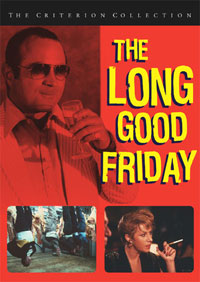 The DVD box has a blurb from an old review that compares it to The Godfather, but in all actuality the very British pulp gangster flick The Long Good Friday is much closer in spirit to TV’s The Sopranos. Matter of fact, it’s fair to say that The Sopranos is a direct descendent of this crime and politics saga. Bob Hoskins, in a brilliant, star-making performance, carries the film as Harold Shand and, like Tony Soprano, he’s a two-bit street punk who has worked himself up the criminal food chain; instead of New Jersey he runs London. Like Tony, Harold fancies himself an ambitious businessman. He thinks the gaudy opulence he surrounds himself with gives him class and makes him legitimate. Also like the TV show, his wife plays a key role in his life - she’s almost a First Lady of the underworld. Unlike Tony, Harold seems to be devoted to his wife Victoria (played by the great Helen Mirren, just hitting her stride in her important run of great film and TV roles). She seems to be a little more posh than him and like his fancy boat, helps him feel like he’s arrived. Harold also has a crew of devoted lieutenants, the younger ones treat him like a father figure. Although maybe what makes these husky, bearish gangsters resemble each other most is the complicated rage that they desperately try to control. Even when they know revealing their true sociopathic nature can be bad for business, they just can’t help themselves.
With The Long Good Friday, British television director John Mackenzie, on a very modest budget, inexplicably made probably the best English gangster film ever. Inexplicable because though the guy continued to work in film and TV for decades he never made anything else of note. Nor did screenwriter Barrie Keeffe, who also came from the small screen, and who, after the acclaim for The Long Good Friday, never had another screenplay produced (he went back to TV). These two guys, along with the strong collaboration from Hoskins (who also came from TV at the time), would create such a special little gem that would help usher in a mini resurgence in home grown independent British film in the '80s (British film meaning paid for by the pound, not the dollar).
The Cotton Club
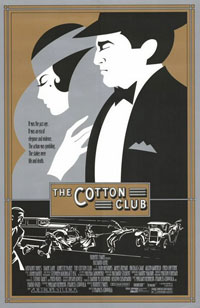 Playing like a cross between Once Upon a Time in America and Purple Rain, with a script by Francis Ford Coppola and the great Albany novelist William Kennedy (author of the depressing Depression classic Ironweed), based on a story the two concocted with The Godfather author himself Mario Puzo, director Coppola’s gangster/Jazz epic The Cotton Club surprisingly fits in less with his Godfather saga, but stands up perfectly with his “experiments in style” phase he’s worked on ever since burning-out after his masterpiece Apocalypse Now in ’79. While The Cotton Club’s two beautiful leads, Richard Gere and Diane Lane, are only able to deliver two-dimensional performances, luckily the brilliant supporting cast (led by the wonderful long-time character bad-guy actor James Remar) manages to bring a third dimension to the acting, helping to keep the film more than watchable. Aside from the acting, gorgeous cinematography, and production design from big names in their fields, cameraman Stephen Goldblatt (The Hunger) and superstar set designer, Richard Sylbert (The Graduate, Chinatown, Rosemary’s Baby, etc.), is the music and musical performances led by tap-man extraordinaire Gregory Hines (History of the World: Part 1) and a number of outstanding re-creations of the era's legends including Duke Ellington and Cab Calloway. The Cotton Club’s production history was mired by nightmares and legal problems (ranging from drug issues to murder) which may explain why the final product may feel a little cluttered or chaotic, but that said, it still holds up as a damn fascinating piece of entertainment.
The massive plot goes something like this... Harlem 1928, hipster clarinetist Dixie Dwyer (Gere), hopes to get hired on at the legendary Cotton Club, but after accidentally saving the life of tough guy gangster Dutch Schultz (Remar), he becomes his boy, appreciated but under his control. Things get dangerous when he falls for Dutch’s girlfriend, Vera (Lane), and they carry on an affair behind his back. Cotton Club owner Owney Madden (Bob Hoskins) and his boyfriend Frenchy Demange (Fred Gwynne AKA Herman Munster) are above Dutch on the underworld food chain, they try to keep him under control but he proves just too psychotic to manage. Meanwhile a black gangster, Bumpy Rhodes (Laurence Fishburne), tries to make an inroad on Harlem’s white controlled crime scene as does Dixie’s ambitious trigger happy little brother Vincent (Nicolas Cage). The battle for the soul of Harlem all leads to lots of gun play and violence between black, Jewish, Irish and Italian gangsters.
Capricorn One
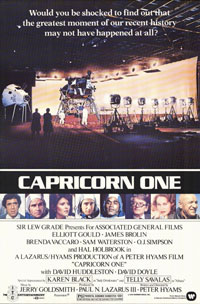 How's this for an all-star 1970s line-up? Capricorn One is a kinda sci-fi, conspiracy minded, political-thriller written and directed by Peter Hyams (Peeper, Outland and the similarly themed The Star Chamber) starring the once popular Elliott Gould as a pesky reporter (as if his Philip Marlowe from Robert Altman’s The Long Goodbye wanted to grow up to be Woodward & Bernstein). The three innocent astronauts with their lives on the line are played by the manly James Brolin (Westworld), the nerdy Sam Waterson (The Killing Fields) and ex-football star O.J. Simpson who became famous for... well you know. The astronauts wives include Brenda Vaccaro (Midnight Cowboy) and Denise Nicholas (Blackula). Hal Holbrook (Deep Throat from All The President’s Men) is the conniving government bureaucrat doing his authoritative three-piece-suit thing. Listed and boxed in the credits as special guest stars is the underrated and strangely attractive Karen Black (Five Easy Pieces) and Telly Savalas, taking a break from TV's Kojak. The rest of the cast is rounded out with other TV fixtures from the decade: Robert Walden, David Huddleston and David Doyle (Bosley from Charlie’s Angels). It’s not just the cast or the haircuts that make Capricorn One so beautifully '70s, it's the paranoia that has come to define so much of the work of the decade.
While a script about a manned rocket ride to Mars that may or may not actually happen sounds coincidentally 2012, Capricorn One is all 1978. Following on the heels of political assassinations, the Vietnam war and Nixon’s Watergate scandal, Hollywood was hot for covert government and corporate dirty work, represented with a number of conspiracy driven films as diverse as All The President’s Men, The Conversation, Winter Kills, The Parallax View, Chinatown, Executive Action and Three Days of the Condor. The '70s sci-fi genre into which Capricorn One sorta falls had similar themes with flicks like Westworld, Invasion Of The Body Snatchers and Silent Running. Of course both genres were basically driven out of business the year before Capricorn One was released when Star Wars was unleashed on the world. Along with the success of Rocky, Hollywood was becoming less interested in the cynicism of the past and now looking for heroes for the future (also ending the mega-stardom of an actor like Gould who specialized in rumpled losers.)
The Iron Giant
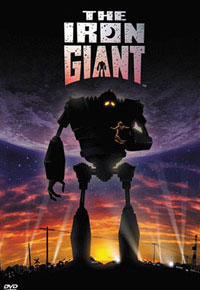 1999 was about as exciting as it gets for feature film animation with such diverse highlights as Walt Disney’s better than expected Tarzan, the jump from TV to the big screen South Park: Bigger, Longer & Uncut, Pixar’s great sequel Toy Story 2, and the American release of Hayao Miyazaki’s Japanese mind-bender Princess Mononoke. Out of nowhere came one of the most unique, stylish and moving animated flicks ever, The Iron Giant, from a Simpsons executive consultant named Bill Bird (who famously would go on to direct two of Pixar’s best, The Incredibles and Ratatouille, and then the live action Mission Impossible - Ghost Protocol).
Taking place in the chilly Cold War year of 1957, The Iron Giant works as both an allegory to America’s heightened paranoia and a stylistic tribute to the imagination those jitters created. It’s sort of a cross between The Russians Are Coming, the Russians Are Coming and E.T.: The Extra Terrestrial (with some Johnny Sokko and His Flying Robot in there too). With a theme of embracing what you don’t understand, it may sound like just another “boy and his giant robot” story, but it’s much richer than a simple pitch and it may just bring a tear to even the most cynical of viewers.
First Blood
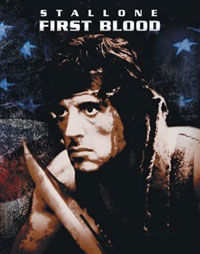 At one point Sylvester Stallone was considered a real actor, bursting into superstardom with the original Rocky flick, becoming a household name and even winning an Oscar for his original screenplay. He would continue to stay popular with its first two sequels, as well as some interesting (though less popular) movies like the quasi Hoffa bio F.I.S.T and the underrated terrorism thriller Nighthawks. He would hit box office gold again in 1982 with an intelligent action flick, First Blood, and though he would go on to become a global brand, First Blood would be more or less the last time he would push himself as an actor (though about once a decade he has managed to pop up in thoughtful, quality non ‘roid roles like Cop Land in ’97 and Rocky Balboa in ’06). Though some of his roles from the '80s have become almost camp classics of bad (Cobra, Tango & Cash), First Blood was about the last time he was able to combine both muscle and a quality script to perfectly suit his oversized ego and release a flick that still holds up today.
Ted Kotcheff was a television director in the '60s, but by the next decade he hit the big screen with a string of fairly popular flicks (The Apprenticeship of Duddy Kravitz, Fun with Dick and Jane and North Dallas Forty). In ’82 he made the little seen but admirable cult deprograming drama Split Image as well as First Blood. It would be his peak both commercially and critically before slowly moving back to TV assignments. Still it's an interesting filmography and important to explain why First Blood works so well. Kotcheff was a character driven director, not an action hack.
Rollerball
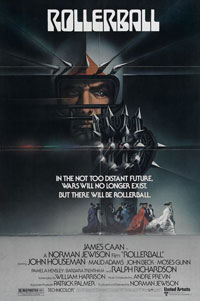 In a bleak, warless future society that stylistically looks a lot like the 1970s, corporations have taken over for governments. But without war the people are still bloodthirsty so they get their kicks from a sport called rollerball, a male version of roller derby, but way more violent and even deadly. Besides guys zipping around a track on roller skates, punching each other out, there are motorcycles too. Worrying that a player can get too popular, corporate head honcho Bartholomew (John Houseman) informs Houston’s star player, the he-man Jonathan E. (played by he-man actor James Caan, a couple years after The Godfather made him a big star), that he needs to retire, but Jonathan E. plays by his own rules and will do what it takes to not be a lackey for the man.
Rollerball director Norman Jewison had a long and respected career moving easily between comedy (The Russians Are Coming, The Russians Are Coming), social drama (In the Heat of the Night) and even musicals (Jesus Christ Superstar), but his work usually had a liberal take to it (A Soldier's Story, ...And Justice for All) and though he was no stranger to straight entertainment (The Thomas Crown Affair) he must have looked a little miscast as a sci-fi action director. Luckily the action is well shot and the rollerball game sequences are still amazingly exciting, but there are only a couple of those games so, at over two hours long, there’s a lot of exposition in between. As a kid, all the talk was boring and confusing, but now I can appreciate what Jewison was driving at. There is definitely a rebellious anti-corporate spirit at work here and a prophetic vision of corporate dominance over sports and everyday life to come.
Strangers on a Train
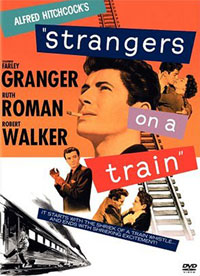 Coming off a string of underwhelming flicks (The Paradine Case, Under Capricorn and Stage Fright), Alfred Hitchcock would kickstart a decade of unparalleled creativity with Strangers on a Train, a nasty little piece of amoral pulp, delightfully mean spirited and loaded with cruel dark humor. This is textbook Hitchcock, full of as many classic set-pieces as any of his films and a must for anyone who wants to learn about the simplicity of creating genuine tension from dynamic camera moves and clever editing. Besides the master director, the other highlight of the film is Robert Walker who gives the performance of his short career as the one of the great conniving psychopaths in film history. Unfortunately not long after the film was completed Walker died, at the age of 32, from an apparent fatal combination of alcohol and prescription drugs. Also of note, any documentary or academic study on the history of homosexuality in film will certainly cite Walker’s character’s obvious closeted sexuality (and maybe for shame because, like many gay characters on the screen back then, his possible homosexuality is linked to his disturbed nature).
The beautifully crafted screenplay is credited to two nobodies (Czenzi Ormonde and Whitfield Cook) and the great crime writer Raymond Chandler (Double Indemnity, The Big Sleep). It was based on a novel by Patricia Highsmith whose series of books about the psycho Tom Ripley was the source for the excellent Hitchcockian French thriller Purple Noon as well as the notable The American Friend and The Talented Mr Ripley. Instead of Ripley, the deadly mind at work here is Bruno Anthony (Walker). When Bruno recognizes a local tennis playing celebrity, Guy Haines (Farley Granger), on an East Coast train, he seems to know everything about the guy. Bruno is fully aware that Guy is stuck in a loveless marriage to the frosty Miriam (Laura Elliott) and wants to get rid of her so he can upgrade to the more beautiful Anne Morton (Ruth Roman), who comes from a respected rich family which could help in Guy’s future prospects. Bruno suggests to Guy, hypothetically, they do “criss-cross murders” - Bruno will bump off Miriam and Guy can kill Bruno’s father for him. Since they don’t know each other, they would never be suspects. Guy excuses himself from the stalker, but for Bruno, maybe this wasn’t hypothetical.
The Ninth Configuration
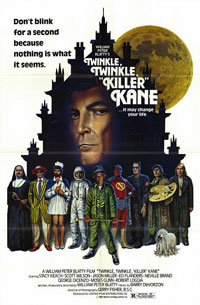 The small list of novelists turned movie directors would include Maya Angelou helming Down in the Delta, Stephen King doing Maximum Overdrive, Thomas McGuane's Ninety-Two in the Shade, Michael Crichton directing half a dozen flicks (including Westworld and Coma), and Paul Auster doing a couple as well. Dalton Trumbo’s adapted his own anti-war novel, Johnny Got His Gun, but by then he was known more as a screenwriter than a novelist. The most famously embarrassing film might be Norman Mailer’s Tough Guys Don’t Dance, while the strangest might be by William Peter Blatty, author of The Exorcist, who also wrote the screenplay (and was credited as a producer on the mega hit). For his directing debut seven years later he would adapt his bizarre, surreal, novel “Twinkle, Twinkle, 'Killer' Kane,” later retitled The Ninth Configuration. The movie was labeled brilliant by a few and a flop by most. While it’s certainty interesting, wildly ambitious and definitely uncommercial, if nothing else, it has the wildest bar room brawl fight scene in movie history, and that makes the whole experience worth the price of admission.
The Ninth Configuration is kind of a cross between One Flew Over the Cuckoo's Nest and MASH (with a little King Of Hearts, Catch 22 and The Ruling Class mixed in). It takes place in a military mental hospital - actually an old castle deep in the mountains of the pacific Northwest - which houses a group of eccentric oddball patients, including an insane astronaut, Billy Cutshaw (Scott Wilson) and other assorted movie quoting, costume wearing, cut-ups (Moses Gunn, Robert Loggia, George DiCenzo and Jason Miller who played Father Karras in The Exorcist). Miller himself was a successful playwright with That Championship Season and he also directed its film version. A new doctor, the ultra intense Col. Vincent Kane (Stacy Keach) arrives to check on the progress of Dr. Fell (Ed Flanders). Through the course of events it becomes clear that Kane is maybe just as crazy as the crazies (and not a Patch Adams kinda fun crazy, relating to his patients with a clown nose, but a deeply violent and dangerous crazy). The film is making a statement about the meaning of insanity. Isn’t war itself more insane than reality (or something like that)? And if that’s not enough there are also religious overtones about the meaning of good and evil. OK, SPOILER ALERT for anyone who can’t see it coming, but yes, we eventually find out that Kane is there for treatment, he is not a doctor but a bad ass psycho marine, and Fell is actually his brother treating him. Reviewing the plot is almost as tedious as the movie itself; what matters is that great bar room scene.
Some Like It Hot
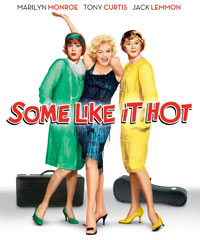 Easily the best drag-comedy ever made, nudging just past Tootsie, Some Like It Hot confirms that Billy Wilder was one of the two greatest directors in America of his generation, alongside fellow non-American born filmmaker Alfred Hitchcock. Besides its ranking as a terrifically entertaining comedy, it also has cultural importance as the best flick Marilyn Monroe had starred in (she only had one scene in the masterpiece All About Eve). Following her earlier collaboration with Wilder, The Seven Year Itch, this film was sold to the public as a Monroe vehicle. She handles the comedy splendidly and oozes sex deliciously (in some outfits that even by today's standards would be considered kinda hootchie), but it’s the rest of the cast that Wilder surrounds her with who make it more than just your average sex farce. Pretty boy Tony Curtis and young funnyman Jack Lemmon (who won an Oscar a few years earlier for Mister Roberts) are exceptional spending a majority of their on-screen time dressed as women. There’s also gangster tough-guy, George Raft (a sorta comeback for him), bizarre super-ham Joe E. Brown (who you could say steals the film), and the great journeyman character actor Pat O’Brien rounding out the cast. Wilder co-wrote the script with I.A.L. Diamond for the second time after Love In The Afternoon and together they create real magic; taking a plot that would be considered a third tier sitcom idea and ended up setting the blueprint for what is now considered a perfect and smart comedy. Wilder and Diamond would go on to collaborate on ten more films together, including The Apartment, but Some Like It Hot is the script that still influences films today (not that Cameron Crowe and others haven’t ripped off The Apartment a number of times).
Opening like a send up of Warner’s black & white gangster films, it’s 1929 Chicago and the town is jumping. At a speakeasy, two musicians, Joe (Curtis) and Jerry (Lemmon), are in a dire financial predicament, especially when their latest gig is broken up by a police raid. Under their nose Detective Mulligan (O’Brien) is busting big time underworld figure Spats Colombo (Raft, back in his full mean gangster persona), which leads to the now famous Saint Valentines’s Day Massacre (where a bunch of gangsters got machine gunned down in cold blood). Unfortunately Joe and Jerry witness it and now have to go on the run. Solving both their financial problems and a way to hide out, they join an all girls band heading to Florida (completely wigged, made-up and dolled out). Now under their new female aliases Josephine and Daphne, they take a long train ride South with their new band, both becoming infatuated with their ditzy new lead singer, Sugar (Monroe). In awe of her sexy, curvy walk and insecure about their new guise, Lemmon declares the obvious, “I tell you, it’s a whole different sex.”