Perú Negro   March 17th, 2008 - San Francisco
SEARCH
Go ahead and browse our show archives by clicking on any store location.
  1. *SAN FRANCISCO
  2. *HOLLYWOOD
  3. *BERKELEY
Or if you would like to browse by an artist name, you can do that right here.

Photos 0 to 0 of 0
Reviewed by d.a. johnston

The “nonstop carnival of rhythm” (Los Angeles Times) that is Peru Negro consists of 20+ singers, dancers and musicians that perform all over the world. They have been appointed the Cultural Ambassadors of Black Peru by the Peruvian government. Through their work, the members of this Afro-Peruvian music and dance company recreate the folkloric history of their ancestors-- the people stolen from Africa and forced into slavery in the 1500s by the Spanish colonizers of Peru.

Where does such an incredible sound come from? In the early 1700s, Peru's slaves were banned from using drums. As a result, percussion was rerouted to the cajun, a wooden box of agricultural origins and a mainstay in Black Peru. A hybridization of African, Indian, Latin and European music evolved over the next 200 years, and in the late 1950s the African elements of Peruvian music were reborn. Utilizing a wide variety of traditional instruments-- including church tithing boxes and donkey jaw bones-- Peru Negro serve up a marvelous feast of music and dance, as well as a glimpse into their culture and heritage through the combined talents of generations.

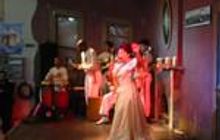
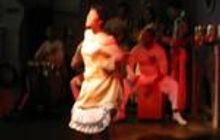
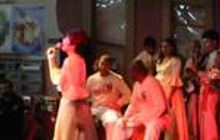
Led by one of the group's founders Ronald Campos' song Rony, Peru Negro started off their feel-good set with brightly colored costumes, theatrics and personality.  A young boy took to the stage creeping, looking around as if to make sure the coast was clear. "Cajones" commenced and offered at its height a total of 5 percussionists on the wooden cajun. Demonstrating an incredible multi-rhythmic ability, all percussionists clapped, tapped their feet and heels and drummed simultaneously while offering choreographed moves with grace and smiles. The 5 drifted seamlessly with the help of traditional guitar, into a demonstration of various members' tap abilities and the complicated footwork involved in African dancing in “Zapateo.” They were getting to the very roots of calling out, challenging and friendly competition between all dancers/percussionists while laughing and making jokes without language -- save the occasional holler, tease and whistle. Solely through body language and dance they acknowledged the pristine fact that music and movement are primal and among the most important forms of communication.

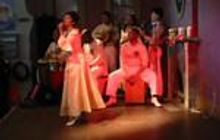
"Mandinga" featured beautiful and strong female lead vocals and offered a familiar aural transmission of congas, bongos, and Cuban-style rhythms to its music, as well as African style call-and-response vocals. This yielded a deep, infectious sound. “Samba Malato” brought 5 female dancers in red and white dresses to the stage where they worked their way through their movements with precision and joy, to a duet of male and female voices. Carrying buckets and referencing washing at one point in movement, the women collectively cast down their wash to commune in a circle, properly channeling a rich festive atmosphere.

Continuing with high energy, the tireless group moved into “Bailaras.”  The crowd was clapping, dancing and shouting out to the performers. The incredible Afro-Peruvian beats and complex rhythm were undeniable. Lalo Izquerda, a founding member of the group, was standing right by the stage and had been cheering on the group.  They stopped and asked him to join them onstage to formally thank him as one of their fathers.  Through a shower of praise and adoration they urged him to demonstrate a taste of his tap mastery, and so he did, to a mighty wave of applause. He graciously bowed to the crowd and again to those continuing the tradition. It was a beautiful moment of passing the torch to the next generation.

Concluding with “Festejo” the band accompanied 3 male and 3 female dancers taking the stage, flooding the stage's blue background with flashes of their red and white traditional costumes. The fury and precision of their African-rooted routines, as well as seeming parodies of colonial-era ballroom steps were elevated yet more by the influence of modern ballet. Should you ever have the opportunity to see them perform live, I highly recommend this unique hybrid of ever-evolving Afro-Peruvian culture, movement and spirit. Part of their beauty lies in a pure desire to preserve their cultural heritage as well as create new elements of it. Peru Negro's music and performance embodies the spirit of a culture through a tireless and colorful celebration of life, family, community and history.