Biography by Stephen Thomas Erlewine (All Music Guide)
Super Furry Animals were one of the first post-alternative bands, fusing together a number of disparate musical genres -- including power pop, punk rock, techno, and progressive rock -- creating a shimmering, melodic, irreverent, and willfully artsy rock & roll. As one of the leading bands of the mid-'90s Welsh movement, they were already tagged as outsiders by their tendency to sing entire songs in their native tongue, but their very approach was unique, full of both whimsy and left-wing political activism. What set them apart from their fellow Welsh bands were their infectious melodic sensibilities and their wildly irreverent attitude, which peers like
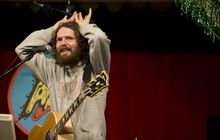
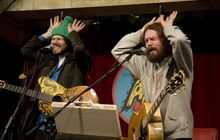
Formed in Cardiff, Wales, in 1993, Super Furry Animals were comprised of Gruff Rhys (lead vocals, guitar), Huw "Bunf" Bunford (guitar, vocals), Guto Pryce (bass), Cian Ciárán (keyboards, electronics), and Dafydd Ieuan (drums). All five members had played in bands throughout their teens prior to forming the group, most notably Rhys, who had previously played in a jangle pop band named Emily that was briefly signed to Creation, as well as a Welsh noise rock band called Ffa Coffi Pawb. Following the dissolution of Ffa Coffi Pawb, Rhys played in a trio with Pryce and Ieuan, which eventually evolved into Super Furry Animals. Initially, the group was a techno outfit, yet they quickly evolved into a neo-psychedelic and progressive pop outfit. After two years or writing and touring, the band signed with the Cardiff-based independent label Ankst and released their debut EP, Lianfairpwllgywgyllgoger Chwymdrobwlltysiliogoygoyocynygofod (In Space), which was sung entirely in Welsh. It was followed within a few months by another EP, Moog Droog, which was also sung in Welsh. Both EPs were produced by Gorwel Owen.
By the end of 1995, Super Furry Animals had gained a strong, cross-generational fan base in
"Something 4 the Weekend" and "If You Don't Want Me to Destroy You" became hit singles in the summer and fall of 1996. The latter single was scheduled to have a B-side called "The Man Don't Give a Fuck," which was built on a sample of Steely Dan's "Showbiz Kids," but Donald Fagen refused to give the group permission to use the recording. By November, he relented and "The Man Don't Give a Fuck" was released as a limited-edition single in early December, and it reached number 22 on the