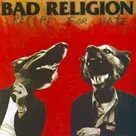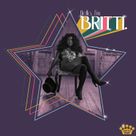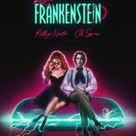
We've had so little rain this year in L.A. that I figure I had better take advantage of today's damp weather to launch this blog. Although, I must admit that I cheated with a few parasols and a dude in rain slicks. Click here to check out the first umbrella gallery, posted back in 2010.

One of the most rewarding and confounding things about being an Earthling who loves music is watching my tastes change with time, or better said, watching them grow – I don’t think there’s very much music I once loved I no longer do. My first favorite acts (at age 3) were The Beatles, Linda Ronstadt, and The Chipmunks, and I still adore them all today.
More surprising to me is how much I’ve come to cherish music I would have once loathed. 2010 became the year I “discovered” easy listening, both light music (which can be found in Amoeba Music's classical section) and lounge music (which can be found in the coincidentally-named Lounge section).


Lena Horne, the legendary jazz singer, icon of American popular music and award winning actress -- and as far as I’m concerned, one of the most captivating women ever to walk this planet -- died yesterday, Sunday, at New York-Presbyterian Hospital. She was 92. Called "one of the incomparable performers of our time," she was best known for her plaintive signature song "Stormy Weather" from the film of the same name and her starring roles in such pictures as Cabin in the Sky, Panama Hattie, and The Wiz.
Horne had an easy, sultry singing voice, insanely beautiful, and her compelling sex appeal may have at first overshadowed her talents, but she wasn’t just another pretty face. When she signed with MGM Pictures, she was among the handful of black actors to have a contract with a major Hollywood studio, though it was never easy. Her life long battle against bigotry took its psychic toll; Horne was perpetually frustrated with the public humiliation of racism. A pivotal moment took place in 1945 as she entertained at an Army base in Europe and saw that German prisoners of war were seated up front while black American
soldiers were relegated to the back. She worked with Eleanor Roosevelt to pass anti-lynching laws. Her involvement in various social and political organizations and her friendship with Paul Robeson, who was just as well known as a singer as for his communist leanings, had Horne’s name placed on the era’s blacklists during the red scare witch hunts of the early 1950’s and the age of Joseph McCarthy.
soldiers were relegated to the back. She worked with Eleanor Roosevelt to pass anti-lynching laws. Her involvement in various social and political organizations and her friendship with Paul Robeson, who was just as well known as a singer as for his communist leanings, had Horne’s name placed on the era’s blacklists during the red scare witch hunts of the early 1950’s and the age of Joseph McCarthy.Born Lena Mary Calhoun Horne in Brooklyn on June 30, 1917, she dropped out of school at 16 to help support her family. She joined the chorus line at the Cotton Club, the mythical Harlem night spot where the entertainers were black and the clientele white. By the spring of 1934, she had a featured role in the Cotton Club Parade. She left the club in 1935 to tour with Noble Sissle's orchestra, then billed as Helena Horne. Horne was also one of the first black performers hired to sing with a major white band when she joined Charlie Barnet's orchestra in 1940. She was the first black performer to play the Copacabana nightclub in New York City.
In 1943, MGM Studios loaned her to 20th Century-Fox to play the role of Selina Rogers in the all-black movie musical Stormy Weather. Her rendition of the title song became a major hit and put her name center stage for the next several decades.

Horne became one of the most visible celebrities in the civil rights movement of the late 50’s and 1960’s. She made headlines for once throwing a lamp, an ashtray and several glasses at a customer who made a racial slur in a Beverly Hills restaurant, bloodying the man's forehead. In 1963 Horne joined with some 250,000 others in the March on Washington, D.C. when Martin Luther King Jr. gave his "I Have a Dream" speech. That same year Horne spoke at a NAACP rally with another civil rights leader, Medgar Evers, just the weekend before his assassination.
In the early 1970’s Horne went into seclusion. In a period of just over a year, her father, son and husband all died. She became too grief-stricken to perform or even see anyone but her closest friends. Oddly enough, comedian Alan King was the one who convinced her to return to the stage and public life.
Horne had her first big Broadway success as the star of Jamaica in 1957, but in 1981, for her one-woman Broadway show, Lena Horne: The Lady and Her Music, she won a special Tony Award and the 333 performances still hold the record for the longest-running solo performance in Broadway history. In it, she sang two versions -- one straight and the other gut-wrenching -- of "Stormy Weather" to give audiences a glimpse of the spiritual odyssey she had taken in of her five-plus decade long career. In 1984 she was Kennedy Center Honors recipient for extraordinary talent, creativity, and perseverance. And of her four Grammy Awards, the one she received in 1989 was the Grammy Lifetime Achievement Award.


I know what you’re thinking: How can it be that it’s Black History Month again, already? It seems to come up faster with each passing year. No sooner do I finish cleaning up all the gift wrap and decorations from 2009’s BHM festivities when – BAM! – time to break ‘em out again for 2010.
But I am excited! I love draping my house in the traditional BHM crushed-velvet flour sacks, heated bear skins, and twinkling, sapphire, mailboxes. We gather together around the hot oil printing press and sing BHM carols, get tipsy on Pancake-Sausage Nog, and remind each other, with love in our hearts, not to forget to turn off the air conditioner before leaving the house. Oh, joy! Oh sweet, unmitigated joy!
Of all these rituals, my favorite is the singing of the carols. I thought I’d share some of them with you, and invite you to sing along with me! Just click on a song below and belt one out. If you’re at work, or reading this on your iPhone while standing in the check-out line at Trader Joe’s, or simultaneously looking at Internet porn (way to multi-task!) – no matter! Sing all the louder! Let everyone know: You’re Black and You’re Proud!
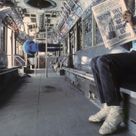
Now that the MJ hoopla is starting to die, ease on down Beverly Blvd to see the young Michael strut his stuff(ing). Seeing The Wiz is one of my earliest memories. I saw it upon its release in '78-- when I was 3! I was actually a little apprehensive of going to the Wednesday screening, as I had caught this on TV a few years ago and kind of wrote it off. Seeing it back at a moviehouse really made a difference. It's certainly rough around the edges-- odd directing, histrionic Diana moments, extended dance sequences etc. However, Miss Ross' fellow travellers give stellar performances, the subway sequence is still freaky and MJ was still just an innocent kid-- he hadn't even released Off the Wall yet! Paired up with the cult favorite Return to Oz, it's a double well worth your $7...
New Beverly Cinema
7165 Beverly Blvd
Los Angeles, CA 90036-2548
(323) 938-4038
New Beverly Cinema
7165 Beverly Blvd
Los Angeles, CA 90036-2548
(323) 938-4038