Amoeblog

REVISITING DIRECTOR DAVID LYNCH'S BODY OF WORK

Posted by Billyjam, November 25, 2008 05:07pm | Post a Comment
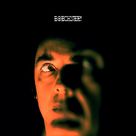
eraserhead
Ever since recently receiving word that film director David Lynch would be visiting Amoeba Music Hollywood today (6:30PM but get there a little early) for an in-store signing in celebration of the release of the recommended new nine disc DVD box set collection David Lynch The Lime Green Set, I decided to do a little digging in the crates and host my own personal David Lynch film fest: going back to re-watch many of the living legend's classic creations, most of which I hadn't seen in many years.

I watched several episodes of the early nineties show Twin Peaks (which was executive co-produced by Lynch along with Mark Frost), Eraserhead, Blue Velvet, and Wild At Heart  -- all of which combined, I know, really only scratch the surface of this fine film-maker's body of work. But still it was enough of a refresher course to give this Amoeblogger a proper dose of the heart and soul of the artist behind these brilliant works.

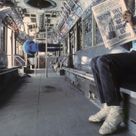
I guess in retrospect what is foremost so striking about the 1990/91 ABC TV series Twin Peaks, to which the 1992 David Lynch film Twin Peaks: Fire Walk with Me was a sequel of sorts, is the fact that it even made it onto network TV in the first place, and managed to last two seasons at that. It was not your typical mainstream TV fare by a long shot but like any of the best TV shows it was addictive viewing for those who got it. I guess that is the key to all of Lynch's work: you have to appreciate all of his nuances and to fully dispel everyday reality & allow yourself to submerge deep into Lynch's world -- typically a slightly surreal parallel universe that summons blue velvet by david lynchup the place of dark dreams we've all experienced at sometime --  to really get and to fully appreciate the magic David Lynch manifests on the screen. 

Continue reading...

Earworms, brainworms, and sticky music

Posted by Whitmore, June 28, 2008 10:05pm | Post a Comment

An Earworm is a term for a portion of a song or other musical bit that gets "stuck" in someone’s head and repeats continually against a their will. Often, relief comes only when it is swapped with a newer fragment from another tune. Research indicates that the people who get the most earworms tend to listen to music frequently and are more likely to have other neurotic habits, such as biting pencils or finger nails or tapping fingers. In Oliver Sacks latest book, Musicophilia, he defines the phenomenon as “involuntary musical imagery.”

I’m regularly haunted by fractions of tunes wandering between lobes. And more often than not, these are unfamiliar melodies incessantly repeating, tumbling about, until my slipping weak-ass sagacity cracks. Musicians tend to more susceptible to earworms, and it probably doesn’t help that I listen to scraps of songs all day at Amoeba as a I comb over the piles of used, alien 45’s littering my office. Yesterday, for example, I played snippets of possibly three hundred different singles just trying to figure what is what and what is not. I seem to have survived the experience, at least for the moment; in any case I won’t know until the next ghostly notes infest my synapses. Unfortunately some melodies or musical moods are so perfectly defined; my simpleton’s grey matter is rather easy prey to a full-on earworm assault. For the last couple of weeks I’ve been re-watching all 29 episodes of David Lynch’s 1990 -1991 television show Twin Peaks. And no, the Twin Peaks Theme is not the exact piece of music bouncing around my skull, but Twin Peaks is the source of the latest spell.

Gee, Ain't It Funny? Horror and Bertolt Brecht Don't Mix: Funny Games (2007)

Posted by Charles Reece, March 23, 2008 10:43pm | Post a Comment
And I’m proud to be an American,
where at least I know I’m free.
And I won't forget the men who died,
who gave that right to me.
-- Lee Greenwood


Depicting beauty gets a free pass compared to depicting violence.  Mankind's history of brutality indicates that violence is as much -- if not more -- a determining factor in the creation of what now constitutes civilized self than our love for beautiful things.  Why, then, no "that portrait of the beautiful Contessa is pure exploitation?"  Accusations of exploitation only enter when there's a gaping wound involved (or prurient nudity, which is objected to on the grounds that it does violence to its subject -- an objection that is, in practice, limited to pornography for heterosexual men).  It's assumed that there's something wrong with you for taking any sort of pleasure in the the depiction of the violent side of our cultural constitution.  Despite that, I had a real enjoyable time the other day at the moving picture show thanks to Michael HanekeFunny Games is a good, psychological thriller that's no more gruesome than Psycho, largely due to Haneke's mastery of Hitchockian prestidigitation.  Just like Morrison in Florida, the meat of the matter is more suggested than shown.  Many critics were distraught over Haneke's hooks-on-the-eyelids sadism anyway, referring to his film as another instance of "torture porn" and/or that it's nothing but a misery to sit through (at least for right-thinking folk):

David Lynch says .... Au Revoir Simone

Posted by The Bay Area Crew, January 26, 2008 12:41pm | Post a Comment
I'm an absolute nut fan when it comes to David Lynch. This thrilled me to no end:


Au Revoir Simone, performing live on the Amoeba Haight Street Stage, Sunday.

Yes, tomorrow - Sunday January 27th, at 2pm in the afternoon.


Free and all ages. That's how we do it.

Thank you Mr. Lynch for your mind, and thank you for sharing it with us.

marking the beginning of a new venture -- or, my first post

Posted by Eric Brightwell, July 26, 2007 11:49am | Post a Comment
I finally got around to watching the most recent 北野 武 Takeshi Kitano dvd the other night-- 2005's  Takeshis' ...

It concerns an established actor, Beat Takeshi, and his crossing paths with a struggling actor, Takeshi Kitano. A significant number of the cast play dual roles, which I was embarrassingly slow to comprehend, given the fairly confusing abstractions within film. As Beat Takeshi, Kitano plays himself as boorish and self-important and satirizes his own artistic conventions to comic effect. In his film-within-a-film, he plays a bandaged yakuza character. Annoyed by cicadas at his Okinawan hideaway, his character "unexpectedly" shoots his girlfriend before turning the gun on himself.

The second half of the film grows even less conventional. Sometimes it just seemed strange for the sake of being strange. It moved toward abstraction like David Lynch's last few films have, as if to bait the deluded fans into comparing their own narrative reconstructions. I started to lose a bit of interest at that point since that kind of "artistic innovation" became pretty cliché before my parents ever met.
One ingredient I quickly realized was possibly detracting from my enjoyment was the absence of longtime musical collaborator Joe Hishaishi (or, Hisaishi Joe, Mamoru Fujisawa's Nipponized version of "Quincy Jones"), whose moody, jazz & Japanese -influenced scores have always contributed to the tone of Kitano's previous films so complimentarily. I guess Takeshi Kitano and Joe Hisaishi got into it on the set of the amazing Dolls a few years back and lamentably ended their artistic arrangement. Apparently, Kitano saw Hisaishi walking in the rain with Hayao Miyazaki.
BACK  <<  1  2  3  4  5  >>  NEXT