Amoeblog

A brief (and by no means complete) history of Black Los Angeles. Happy Black History Month!

Posted by Eric Brightwell, January 30, 2012 07:19pm | Comments (1)
Los Angeles' black population is relatively small compared to the city's other major racial and ethnic minorities. The LA metro area is only 8.7% black as compared to 47% Latino (of any race), 28.7% non-Latino white, and 14% Asian/Pacific Islander. However, since its inception, black Angelenos have always played a major role in LA's history and culture. Los Angeles is one of the only major US cities founded largely by people of black African ancestry. When it was still a Spanish colony, Los Angeles began life as El Pueblo de Nuestra Señora la Reina de los Ángeles on September 4, 1781. Of the 44 pobladores who ventured over from nearby San Gabriel, a majority of 26 were identified as having African ancestry.

BLACKS IN MEXICAN AND EARLY AMERICAN LOS ANGELES

Pio Pico
Pio Pico ca. 1890

During the period that Los Angeles was part of Mexico (1821-1840), blacks were fairly integrated into society at all levels. Mexico abolished slavery much earlier than the US, in 1820. In 1831, Emanuel Victoria served as California's first black governor. Alta California's last governor, Pío de Jesus Pico, was also of mixed black ancestry. The US won the Mexican-American War and in 1850, California was admitted to the United States. Although one of America's so-called "free states," discriminatory legislation was quickly enacted to restrict and remove the civil rights of blacks, Chinese, and Native Americans. For example, blacks (and other minorities) couldn't testify in court against white people. 

Continue reading...

Happy birthday Bronze Buckeroo - Herb Jeffries turns 98 today.

Posted by Eric Brightwell, September 24, 2011 02:18pm | Post a Comment
HAPPY 98th

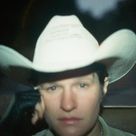
Herb Jeffries

Today is the 98th birthday of actor/singer Herb Jeffries. Although not widely recognized today (especially among non-black audiences, during his heyday in the 1930s and '40s he was an enormously popular singer and the first black actor to star in Westerns. I'd probably know nothing of him except for my tenure in the Black Cinema section at Amoeba, where elderly gentleman reguarly treated me to their reminiscences about a black singing cowboy they'd idolized as kids. 

Detroit 1913


Herber Jeffries was born September 24, 1913 in Detroit, Michigan to Afro-Sicilian pianist Umberto Balentino and his Irish-American wife, Mildred. He never knew his father and was raised by his single mother, who ran a boarding house. Although light-skinned and almost surely able to "pass," he identified as black and associated himself with Detroit's Howard Buntz Orchestra, which brought him a measure of local fame.

Erskine Tate Vendome Orchestra

Continue reading...

Black Cinema Part III - the TV age and beyond

Posted by Eric Brightwell, February 15, 2010 12:42pm | Comments (2)
In American silent films, minority roles were almost invariably filled by white actors in exaggerated and offensive make-up. Latinos in silent films usually played greasers and bandits; Asian-Americans usually played waiters, tongs and laundrymen; and blacks usually played bellboys, stable hands, maids or simply "buffoons." Not surprisingly, both Asian-Americans and blacks responded by launching their own alternative silent cinemas. But whereas Asian-American Silent Cinema quickly faltered, silent, black "race movies" flourished. In the 1930s and '40s, Hollywood began to phase out the practice of blackface (while continuing the practice of redface and yellowface) and successfully wooed race movies' sizable and thus profitable audience. By the 1950s, with its enormous budgets and star power, Hollywood had effectively co-opted and destroyed the independent Black Cinema known as race movies. The result was that there were far fewer examples of Black Cinema in the decade. In the years that followed, as TV chipped away at film’s dominance, a few black actors began appearing on the small screen in shows like Beulah (1950-1953) and The Amos 'n Andy Show (1951-1953) which, whilst hardly socially progressive, at least offered more acting opportunities for black actors.

Continue reading...

Los Angeles' Pan-African Film Festival ...a year heavy on Nollywood and South African films

Posted by Eric Brightwell, February 12, 2010 03:46pm | Comments (3)
Pan African Film and Arts Festival
Los Angele
s’s Pan-African Film Festival is currently in effect (February 10-17). I have a long-lasting love-hate relationship with it. On the one hand, their website (despite improvements this year) remains hard to navigate, is rife with typos, incomplete information and omissions. In other words, it’s inexcusably bad. How about a calendar, folks? 

In addition, every year I take issue with the selection of films. The programmers have a very odd definition of “Pan-African.” Last year was the worst, with the focus on the African diaspora coming at the expense of even a single African feature. Thankfully, this year there are several African features but still some questionable choices. It’s nice to see films about Africa’s many-but-usually-ignored non-black people, such as Finemachiyamoché, about Moroccan Jews, and Florida Road, starring members of South Africa’s sizable south Asian population. On the other hand, Forgotten Bird of Paradise, about Papua is, regardless of its possible merits, an embarrassing example of the organizers' colorist, transracialist equation of African-ness with pigmentation rather than actual African ancestry. The inclusion of an Iranian film, The Stoning of Soraya M., is a real head-scratcher. Are they equating Islam with African-ness now? Another odd choice is Darfur, directed by German hack Uwe Boll (BloodRayne 3, House of the Dead, Postal Zombie Massacre and other garbage).

Continue reading...

Black Cinema Part II - Race Movies - The Hollywood Studio Era

Posted by Eric Brightwell, February 7, 2010 12:13pm | Comments (9)

In the silent film era, most roles for minority characters were filled by white actors in make-up. As a result, Asians and blacks began making their own, alternative cinemas. But whereas Asian-American silent film quickly faltered, black silent film flourished and a great number of race movies were cranked out to eager and under-served black filmgoers. 

By the 1930s, though yellowface and redface continued to be common practice, blackface began to disappear from the mainstream as Hollywood began efforts to woo the audience it had previously been content to insult. This meant there were many new opportunities for black actors, albeit mainly as musicians, porters, chauffeurs, waiters, hat check girls, maids, bootblacks, convicts, bartenders, bone-through-the-nose Africans or buffoons. Because of the improving but still less-than-satisfying opportunities afforded by Hollywood, many black actors supplemented their Hollywood bit parts with simultaneous careers in race movies.

BLACK CINEMA OF THE 1930s

Dark Town Follies A Daughter of the Congo The Exile The Black King The Girl From Chicago Harlem is Heaven Veiled Aristocrats Rufus Jones is President Bubbling Over Chloe Harlem After Midnight  Imitation of Life She Devil Murder In Harlem Sanders of the River Temptation The Green Pastures The Love Wanga Song of Freedom Bargain With Bullets Dark Manhattan Harlem on the Prairie  All's Fair Gang Smashers God's Step Children Gone Harlem Life Goes On Spirit of Youth Swing Two-Gun Man From Harlem Birthright The Broken Earth  The Bronze Buckaroo The Devil's Daughter Double Deal Harlem Rides the Range Keep Punching Lying Lips Midnight Shadow Moon Over Harlem One Dark Night Paradise in Harlem Prison Bait Straight to Heaven Underworld What Goes Up

Continue reading...
<<  1  2  >>  NEXT