Every once in while you realize certain names are always appearing in the credits of old albums, and it’s a constant surprise. I was always astounded by how often I’d find Mort Garson's name, and on some of the most unlikely records. From Doris Day to Mel Torme to Glen Campbell, and all those albums of nice soft-pop vocals from the likes of The Letterman or the Sandpipers or the Glenn Yarborough record of Rod McKuen covers. And you would usually find Mort Garson conducting or arranging those safe but somewhat innocuous collections of ‘pop hits of the day’ by the Hollyridge Strings or the Sunset Strings. And if you’re lucky enough to find it, you’d see Mort Garson provided background music to Laurence Harvey reading poetry on Atlantic. And why do I think it’s so odd? Because whenever I think of Mort Garson I think of the legendary pioneer in electronic music, and not the
multi-faceted, in demand arranger and conductor.
Mort Garson 1924 - 2008
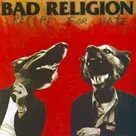
Appreciating Crass
cohesively promote anarchism as a political ideology. While other punks might have been singing about "AN-AR-CHY" for shock and fashion, anarchism was a way of life for Crass.
They formed a rock and roll resistance movement against the excesses of culture, using an aggressive sound and image to gain creditability for a pacifistic ideology. Complex, man.
son of hysteron proteron: part two
Many, many questions … mostly about the space-time continuum. I imagine it doesn’t actually run in a straight line, but in a vertical spiral, spinning in several directions simultaneously and at undulating speeds, analogous to a surging elliptical orbit, gyrating and wobbling like a mountain of dradles as they lose momentum. Think of ‘time’ as one of those old turntables that change a stack of records by dropping the next platter, except this turntable twists unpredictably forward and backwards, erratically spiraling and switching speeds, coughs up the record done, spits out a new one. Better yet, think of ‘time’ as a turntablist who is sandwiched between two turntables stacked on top of each other spindle to spindle, and the DJ is simultaneously scratching, looping, cross fading, juggling beats, rubbing, bugging, juggling the thing of a thing of a thing, cutting and pasting, grinding and humping, downbeat sweeps, creeps, bumping and slamming, twiddle, diddle, tweak, zig zag, squirrel, scribble scrabble, kif lift, willy nilly, dada, nada, dodo,
zoot horn rollo, zither zather zuzz, hepcat swinging over a Euclidian three ring circus gumbo, without a net, without a tent, without an answer, up shit creek, without a gift on xmas day hallelujah.… then the record changer drops another disc on the other turntable and the tone arm continues all over again.
This is also how one might explain paranormal phenomenon. If the ‘time’ spiral spin’s in conflicting and inconsistent directions, on occasion this spiral inter-splices momentarily into a singular part of the coil. In that collision, we could experience a virtual and distinctive time door, opening briefly, accounting for ghostly apparitions, UFO sightings, déjà vu and even disappearing socks.
search for the holy grail: episode 4

A particularly rare and much sought after EP from Anne Briggs, “The Hazards of Love” from 1963 on Topic Records, draws a pretty penny these days on Ebay and other auction sites. Though she never sold a vast number of albums, Briggs was a leading figure on the English folk music revival of the mid 1960’s. First gaining prominence as a traditional a cappella singer, (“The Hazards of Love” has just one song complemented by any instrument, a bouzouki), by the late sixties Briggs would add a bit of instrumentation to her recordings but more significantly she would also include some of her own compositions. Her musical legacy is significant; it wouldn’t be an overstatement to say she was the defining voice of the era, influencing virtually every folk singer from June Tabor, to Sandy Denny, Jacqui Mcshee, Maddy Prior, to Eliza Carthy and Beth Orton. Many of her songs have been recorded by some of these artists plus others such as Pentangle, Bert Jansch, and Dorris Henderson.
Anne Briggs has always been something of an elusive and slightly mysterious figure on the British folk music scene. In the 2006 documentary, Folk Britannia, Richard Thompson recollects that he only ever stumbled upon Anne Briggs twice; and on both occasions she was drunk and unconscious. Her entire catalogue consists of only 3 full lengths albums and this EP, and half of those recordings are her singing completely unaccompanied. The common explanation for her limited output, Briggs retired from recording in 1973, has been her own anxiety and apprehension about the sound of her recorded voice. But whatever the reason, it’s been over 30 years since Anne Briggs has produced any new recordings, and it is unlikely anything new will come to light soon.
Diary of a Stewardess
Only in the middle of Hollywood would you ever find a 7 inch record like this. Yeah it’s a theme song from a soundtrack, but not from your typical movie, this 45 pop record is from the soundtrack of a soft-core pornography hit called "Diary of a Stewardess." Imagine the treasures we could have unearthed if only Amoeba hadn’t opened its doors on Sunset Blvd, but instead, opened for business deep in the heart of the America’s well lit, scantily clad, steady-cam ready, zoom in, action, work-it-a-little-slower-honey, bedroom community known as the San Fernando Valley.
Released in 1972 and sung by Bob Grabeau, Diary of a Stewardess b/w Fasten Your Set Belts (released on Segue Records and based in Canoga Park!) is an actual artifact of the valley’s 1970’s pop-porn culture, a culture that resurfaced with the 1997 film “Boogie Nights.” I bet many of our Dads saw “Stewardess” in a triple bill with “Deep Throat” and “Behind the Green Door.” Okay … maybe not your Dad …
The song Diary of a Stewardess was co-written by the legendary Buddy Feyne, celebrated for his swinging hep-cat lyrics and penning some of the biggest hits of the '30s and '40s, including Tuxedo Junction, Jersey Bounce and After Hours. During his career he wrote more than 400 songs collaborating with legends like Raymond Scott, Al Sherman, Avery Parrish, Louis Jordan, Erskine Hawkins, Lester Young, and even Milton Berle. Feyne’s compositions might even be considered essential to the hipsters of that era, actually any era, as a matter of fact: Bee Bop On the Range, After School Swing Session, Aristocrat of Harlem, Cream Cheese and Jelly, She Works In Men's Pajamas - the list goes on and on. Feyne also wrote the original lyrics to something called Dolomite that a certain bon vivant named Rudy Ray Moore re-navigated into his own signature song.