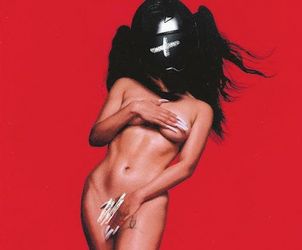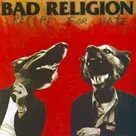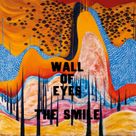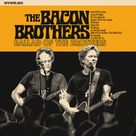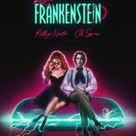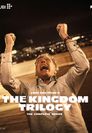
From the recent Daybeds show.

I was a bit slow on finishing it (big surprise), so my essay on Jean-Luc Godard's One Plus One went up today over at the Hooded Utilitarian. Check it out!

The other artist I've been obsessed with lately is Blaze Foley, particularly the recently released LP, Clay Pigeons, which collects some of his itinerant, and absolutely brilliant, performances. He's the best country artist I've heard since Townes Van Zandt ... really, check out the title track:

I'll be participating in a roundtable on Jean-Luc Godard over at The Hooded Utilitarian. My own piece (appearing this Friday) will be on his mixture of radical democracy, black militancy and the Rolling Stones, 1968's One Plus One (aka Sympathy for the Devil). The whole shebang has begun with a lovely introductory essay by Caroline Small. Check it out!

Much of Melancholia is structured similarly to Dogville, making its audience endure the tedium of von Trier's miserabilism for the inevitable big bang pay off. In Dogville, it was the heroine slaughtering an entire town for the various ways the citizens raped her in the previous two hours of screen time, but here it's literally the cataclysm of two worlds colliding -- that, I should note, makes the best use of low end frequencies in any film I've ever heard. (In the director's oeuvre, women have participated in the destruction of their own bodies, their family, their neighbors and now their entire civilization -- where will his heroines go from here?) This isn't a spoiler, since von Trier gives away the plot in the apocalyptic précis that constitutes the first 10 minutes or so of the film. Filmed in an ominously metaphysical slow-motion, this phantasmagoria is surely the best part of the film and a visual allusion to doleful Justine's ultimate fantasy. The film could only go down hill from there as it fills in her dreamy ellipses with the mundane drama that's the majority of the two acts that follow.
In the first act, we see Justine's melancholia destroy her new marriage during the wedding festivities. In "Melancholy and the Act," Slavoj Žižek argues melancholia is a pathological identification with a lost object that's being mourned before it's even lost. Because the identification is fundamentally narcissistic, about what Justine lacks, her husband (the object) can never fulfill what was the cause of the desire, namely a desire for her own desire itself. That is, melancholy "stands for the presence of the object itself deprived of the desire for itself -- [it] occurs when we finally get the desired object, but are disappointed with it." [p. 148, Did Somebody Say Totalitarianism?] Once acquired, the husband loses his ability to fill the void -- to short-circuit the desiring feedback loop -- in Justine's life, so she loses her desire for him (which was actually lacking in the first place). She mourns having lost him before he finally gives up and leaves her.