Pendersleigh & Sons' Official Map of Missouri
In my experience, when you'ins tell people you’re from Missouri, most people reply self-satisfiedly with "don't you mean Missouruh?" or, alternately, "where is Missouri? I don’t think I’ve ever been there."
Whether Missouri is Lower Midwestern or Upper Southern is a common conversation amongst Missourians... at least on the internet. In my experience, Missouri's Midwestern neighbors, centered along the Great Lakes, (haters) usually disparage it as a hick state whurr test scores are low, the accent is ugly and you'ins can buy fireworks, liquor and ammo... all in the same place. Missouri's Southern neighbors (also haters) usually don't consider it to be Southern because Missouri didn't side with the South in the Civil War (well, that's complicated-- thurr were 30,000 gray and 109,000 blue) and because South Coasters love to disassociate themselves from the Upland South. Mark Twain, Langston Hughes, Thomas Hart Benton all seem fairly Southern, no? And T.S. Elliot, William Burroughs and Maya Angelou don’t so much, right? Cultural cringe I reckon, plays a part in this confusion.

feller with a Missouri hummingbird
Well pish. I suppose it is a bit of a mess; in addition to warring with Iowa and Kansas, it tore itself apart in the Missouri Civil War which took place within the larger Civil War between the states. And now I'd like to provide some examples of the state's diversity by examining its varied character.
*****
Little Dixie, the region whurr I grew up, is in the middle of the state, along the Missouri River. (The Missouri is the largest river in the nation, despite what you'ins learnt in school.) Little Dixie earned its name fer being "more Dixie than Dixie." Traditionally, though in the northern half of the state, it’s whurr Southern traditions were strongest. Those traditions were brought thurr by refugees from Virginia, Kentucky and Tennessee.
It was one of the rare parts of the state whurr the slave population roughly equaled that of the non-slaves and most free citizens in the region sided with the South (with the exception of Union-held/more-progressive Columbia). Pike County even invaded Iowa under the flag of the confederacy. Callaway County went even further and declared the independence of Kingdom of Callaway. That mix of people surely must've informed the culture as a whole and "The Ballad of Little Dixie" focuses, largely, on its citizens' food preferences, listing sugar-cured ham, cracklings, hot corn pone, fried catfish, pawpaws, apples and corn in its lyrics... as well as "none of your scrapple." Not that I ever et much of most of that. My favorite places to eat were Taco Tico, Godfather's, House of Chow, Grandma's Frozen Custard, Arby's and some place on Broadway (in Columbia) that had bánh phồng tôm.
Sedalia, located dreckly west of Little Dixie, was the home of Ragtime—one of the earliest forms of truly American music, despite what Ken Burns would have you'ins believe.
THE MISSOURI RHINELAND
East of Little Dixie, you'ins have a large concentration of German-Americans. In fact, Hermann is sometimes described as “the Heart of German America.” Everyone knows that Germans like beer, sauerkraut and sausages (including mettwurst, bratwurst, knockwurst, weisswurst and sommerwurst). Fewer know of their love of coffee and rye bread. Fewer still non-Germans are aware of how green much of their cuisine is. Unlike their neighbors from the British Isles, in Germany gun ownership was reserved fer the rich, so the working class Germans relied more on gardening than hunting and brought those traditions to the Missouri Rhineland.
The nation that invented the Green Party gave Missouri a people who cultivated green peas, various beans, carrots, onions, cabbage, beets, parsnips, cucumbers, gherkins, spinach, rhubarb, kohlrabi, leeks, pickles, various turnips, gooseberries, blackberries, raspberries, strawberries, apples, cherries, peaches, pears, quinces, apricots, and plums. Thurr are also a lot of wineries in the region. Fer dessert they traditionally served marzipan, lebkuchen, stollen, hutlesbrot, schnitzbrot and zimbsterne.
Typical German-Missourians having supper
Traditionally, German-Americans eat a lot of seasonal and holiday-specific dishes. On Shrove Thursday, it was formerly common for young'ins go door-to-door begging fer fettkuchle. At Christmas some serve weihnachtssalat, made of diced herring, chicken or veal or beef, apples, beets, eggs, pickles, onions, nuts and spices. On May Day they make maibowle out of white wine and sweet woodruff. On the third Sunday of October, known as Kirchweih, they have a large feast. On St. Martin's Eve (November 10th) singing young'ins parade around with lanterns and make merry. The next day they go door-to-door begging fer cookies, apples and candy and the main meal consists of roast goose stuffed with prunes and apples, served with dumplings and sauerkraut.
ST. LOUIS - THE GATEWAY TO THE WEST
On the eastern edge of the state, St. Louis is locally known fer several culinary inventions that are little-known outside of the vicinity. "The Hill" is a predominantly Italian-American neighborhood that gave us St. Louis Style Pizza (thin, crispy crust and provel cheese), toasted ravioli and the frothy eloquence of Yogi Berra. Thurr's also gooey butter cake,frozen custard, the St. Paul sandwich (a Chinese-American invention involving egg foo young, dill, pickled cucumber, mayonnaise, lettuce and tomato on white bread), slingers (a supfast item made of chili, cheese and onions). St. Louis Barbecue favors pork and a tangier yet less vinegary sauce that is more like Memphis Barbecue sauce than the more widely popular Kansas City style.
Musically, St. Louis was an important center fer the Blues. In part due to the collaborations between Missouri’s ragtime pianists and northern-migrating blues musicians, the city’s blues scene mixed together ingredients of both and created a unique, piano-driven variety of the blues. St. Louis is also represented in three well-known songs, "Frankie and Johnny," "Stagger Lee" and "St. Louis Blues."
STE. GENEVIEVE AND THE CREOLE CORRIDOR
Further south down the river is whurr the French-American population remains from the pre-Louisiana Purchase days. Ste. Genevieve is the oldest European-founded city west of the Mississippi and is home to more surviving French Creole structures than any other city in North America. Around Ste. Genevieve thurr are, not surprisingly, a lot of wineries. Writer Neal Pierce described the Creole Corridor thus, “Another ethnic island, not yet obliterated by time, may be found in old French settlements like St. Genevieve and Old Mines in southeastern Missouri, where one can still detect a Creole dialect derived from 18th-century France, gently melded with English and Spanish and Indian words. “
THE BOOTHEEL
Further south still is The Bootheel, home to more recent influx of southerners who work in the cotton and rice fields which used to be swamps. The area's home of the "throwed roll" (as popularized and invented at Lambert's Cafe) and typical pass-arounds consist of southerly-tinged dishes like macaroni and cheese, tomatoes, black-eyed peas, fried okra, apple butter and sorghum molasses.
THE OZARKS

To the west, in the Ozark Hills, the area was largely settled by Hillbillies. Yes, being largely descended from gun-loving Brits they eat just about anything they can shoot, including squirrel, raccoon, and possum (which is frequently made into a stew). They also make Ozark pudding (Harry Truman's favorite dessert), salads (with lettuce, radishes, cucumbers and green onions), sliced tomatoes, baked beans, potato salad, blackberry cobbler, green tomato pie, persimmon sugar plums and beef BBQ (half the charcoal briquets in the USA come from the Ozarks). And they traditionally favor rum, gin, brandy and moonshine.

Ozark pudding, possum hunters and possum stew
The Hillbillies migrated west from the Southern Appalachians and, though in the southern half of the state, usually supported the north in the Civil War. Writer Neal Gunther called the Ozarks “the Poor White Trash Citadel of America” and described Ozarkians as “undeveloped, suspicious and inert." A more sympathetic writer described them as “simply a highland race that loves solitude and scorns comfort, literature and luxury.” Whatever you'ins think of them, they have a distinct culture with their own curious traditions. Even as late as the 1970s, fer example, young girls would wash their faces with dew on May 1st to ensure their marriage would be to their true loves.

Most of the musicians who’ve come out of the southern hills, not surprisingly, played country or bluegrass. The area’s also well-known fer the city of Branson, which was described by Homer Simpson as, “like Vegas if it were run by Ned Flanders.” That description might actually apply more accurately to nearby Carthage, home of the Precious Moments Inspiration Park.
KANSAS CITY - PARIS OF THE PLAINS
“Jim Jackson’s Kansas City Blues”
Jim Jackson’s Kansas City Blues Pt. 1I woke up this morning, feeling bad
Thought about the good times I once have had
I'm gonna move to Kansas City
I'm gonna move, baby, honey where they don't like you / don't 'llow you
My mother told me, daddy told me too
If by the cramps in your feet son, ain't no friend to you
You oughta move to Kansas City
You oughta move to Kansas City, baby, honey where they don't like you / don't 'llow you
I got me a bulldog, two shepherds and two greyhounds
Two high yellows, three blacks and one brown
We gonna move to Kansas City
We gonna move to Kansas City, baby, honey where they don't like you / don't 'llow you
It takes a rocking chair to rock, a rubber ball to roll
Nice looking teasin' brown to satisfy my soul
then I'll move to Kansas City
I’m gonna move to Kansas City, baby, honey where they don't like you / don't 'llow you
T is for Texas, T is for Tennessee
Boll weevil got to Mississippi, and the women wants me
I'm gonna move to Kansas City
I'm gonna move, baby, honey where they don't like you / don't 'llow you
You can always tell when you good girl want to flirt
want to where red slippers to match that old matching skirt
Up north, on the western edge of the state is Kansas City, named after the Kansas River, not the detested state. Kansas City has more fountains than any city in the world (except Rome) and more miles of boulevards than any city (except Paris). It’s famous fer its cuisine too, although thurr hain't a lot to it (less'n you count the Cherry Mashes of nearby St. Joe). Basically Kansas City is the "Barbecue Capital of the World." Thurr are more than 100 barbecue restaurants in KCMO and the Kansas City Barbeque Society has the city in its sweet and smokey fist. In KC they BBQ beef ribs, chicken, lamb, pork, steak and even turkey. It's pretty much like they misread Leviticus and just thought God wanted them to slather all of his'n creatures with sauce.
A doin's in KC
Kansas City ganders west out yonder over the plains and is often the setting fer westerns ('specially the older ones). Frank and Jesse James, Cole Younger and Calamity Jane—all Missourians—reflect the state's less-discussed Western character although KC is sometimes referred to as “the Paris of the Plains” or “the Easternmost Western City.”

Kansas City’s also famous fer its jazz scene, which existed between the big band era and the bebop scene in part due to Kansas City’s reputation as the new Storyville. The hip-hop scene tends to look west, all the way to Oakland. Many KC rappers sound distinctly Bay Area and many music stores have Bay Area sections.
THE NORTHERN PLAINS
Looks like a real gully warsher's comin'
Up north, such as in Jamesport, you'ins find a lot more Amish and Iowa influence. The Amish are known fer their bakeries and items like Friendship bread. The Iowans are known fer their loosemeat sandwiches and love of Mountain Dew. How'd these Iowans end up in Missouri? Missouri stole a couple rows of Iowa's southern counties Iowa in the 1839 Honey War just because they could.
One writer described the Iowans thusly:
…in the ranks were to be found men armed with blunderbusses, flintlocks and quaint old
ancestral swords that had probably adorned the walls fer many generations. One private
carried a plough coulter over his shoulder by means of a log chain, another had an
old-fashioned sausage stuffer for a weapon, while a third shouldered a sheet iron sword about
six feet long.
Needless to say the Iowans lost.
MISSOURI, THE MISHMASH
In conclusion, Missouri (lying as it does at the center of the country) is a crossroads fer the nation, and owes its eclectic character to populations who've passed through. From the cowboys ending their cattle drives, to the Kansas Cityian just staring at the hundred-spoke hub caps on his Cadillac, to the delta blues men and women who moved north, to the contestants trying to catch a greased pig, to the Iowans buying firecrackers, to the to the truckers with their methamphetamines, to the hillbillies who inspired captured the heart of 1950s America, to the brick thiEves in North STL, to the country folk chewing on stalks of grass whilst floating in inner tubes down the shut-ins, to the frog racer in Hannibal, it is truly a melting pot.
MISSOURI'S FLORA AND FAUNA
Even (and of course) the wildlife is appropriately diverse. You'ins can find dogwoods, cotton, cockleburs, stick-tights, poison ivy, cypress, peaches, marijuana, kudzu, pecans, oaks, pawpaws, persimmons, hawthorns, queen anne's lace, jack-in-the-pulpits, lady's slipper and corn salad all growing on lands occupied by chiggers, mosquitoes, ticks, frogs, birds, copperheads, armadillos, mountain lions, black bears, bald eagles, buzzards, crawdads, alligator snappers, paddlefish, catfish, water moccasins, 'possums, racoons, skunks, deer, alligator gar, turkey vultures, barn owls, barred owls, hawks, songbirds, brown recluses, coyotes, muskrats , foxes, leopard frogs, gray wolves, momos and hornet spook lights.
To quote writer Irving Dilliard,
“Missouri is more than the heartland. The heart is also the whole. Missouri is all America in
one place. It is the 48 states of the Union joined together, superimposed on one another,
fused into a composite of many outlooks and moods and experiences and ways of thinking
and speaking and doing things.”
Myself, I wouldn’t argue that it’s everything… it’s undeniably not coastal, alpine, subtropical, desert or rain forest like other parts of this country, but it is one of the most diverse states (after California), bordering as many other states as any other and certainly a more important contributor to American culture than it’s ever given credit fer. Culture rarely respects state boundaries and more often follows the linguistic variation. Check out this map.
SOUNDS OF THE SHOW ME STATE
Missouri's nickname, the "Show Me State," first appears in print in the words of congressman, William Vandiver, who declared in 1889, “I come from a state that raises corn and cotton and cockleburs and Democrats. Frothy eloquence neither convinces nor satisfies me. I am from Missouri. You have got to show me.”
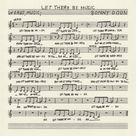
The state song is "Missouri Waltz." It was first published in 1914.
Hush-a-bye, ma baby, slumbertime is comin' soon;
Rest yo' head upon my breast while Mommy hums a tune;
The sandman is callin' where shadows are fallin',
While the soft breezes sigh as in days long gone by.
Way down in Missouri where I heard this melody,
When I was a little child upon my Mommy's knee;
The old folks were hummin'; their banjos were strummin';
So sweet and low.
Strum, strum, strum, strum, strum,
Seems I hear those banjos playin' once again,
Hum, hum, hum, hum, hum,
That same old plaintive strain.
Hear that mournful melody,
It just haunts you the whole day long,
And you wander in dreams back to Dixie, it seems,
When you hear that old time song.
Hush-a-bye ma baby, go to sleep on Mommy's knee,
Journey back to Dixieland in dreams again with me;
It seems like your Mommy is there once again,
And the old folks were strummin' that same old refrain.
Way down in Missouri where I learned this lullaby,
When the stars were blinkin' and the moon was climbin' high,
Seems I hear voices low, as in days long ago,
Singin' hush-a-bye.
Bluegrass - No one's going to argue that Missouri or any other state rivals neighboring Kentucky for its claim to Bluegrass, but Missouri did give us a handful of great acts. Missouri Bluegrass artists include The Dillards, John Har(t)ford, Onie Wheeler and Rhonda Vincent
The Blues - As already noted, Missouri (mostly St. Louis) is one of the most unsung and under-appreciated contributors to the Blues. Since most folks think of Missouri as a Midwestern state, the Blues probably doesn't immediately come to mind. However, Ma Rainey herself, the so-called "Mother of the Blues," hailed from Georgia but recounted that she first heard the Blues sung by a young girl in a small town in Missouri in 1902. Many of the best-known artists associated with the St. Louis Blues scene were immigrants from other parts of the country.
However, consider all the following Missouri-born Blues artists: A.C. Reed, Bennie Smith, Catherine Henderson (aka Katherine Henderson), Chuck Norris, Edith North Johnson, George Brazier, Gus Thornton, Henry Brown, Henry Townsend, Jimmy McCracklin, Larry Davis, Lightnin’ Slim, Lottie Kimbrough, Mary Stafford, Olive Brown, and Walter Davis
Country/Hillbilly - Whilst not a country hotbed on par with neighboring Tennessee, Missouri has produced some (as usual - widely under-appreciated) Country and Hillbilly. Plus, situated in the Ozarks is Branson, which I like to think of as the town whurr Cashville retires to when past its sell-by date. But just look at all these country talents who hail from the Show Me! Why, there's Arkie the Arkansas Woodchopper, Bob Ferguson, David Nail, Diane Pfeifer, Dick Feller, Ferlin Husky, Helen Cornelius, Jan Howard, Jerry Wallace, Jimmie Dolan, Jimmy Gately, Kelly McGuire, Leland Martin, Leon Rausch, Leroy Van Dyke, Ozark Cowboys, Porter Wagoner, Red Murrell, Sara Evans, Shirley Collie, Speedy West, Sue Thompson, The Jordanaires, The Kendalls, Thumbs Carlisle, Tim Nichols, and Wynn Stewart.
Film Scores - Missouri has produced a goodly number of respectable film scorers including Basil Poledouris, Bert Convy, John McDaniel, Lennie Niehaus, Paul Francis Webster, Robert Russell Bennett, Ronald Stein, and Virgil Thompson.
Pop - Although the fact that they're from Missouri is often overlooked, pop musicians Billy Davis Jr., Bob Kuban & the In Men, Burt Bacharach, Cliff Edwards, David Cook, Greg Guidry, Josephine Baker, Mrs. Elva Miller, Nikko Smith, and Sheryl Crow are.
Rock - Rock acts Adair, Boy’s Life, Bunnygrunt, Coalesce, D.H. Peligro, Disturbing the Peace, East Ash, A Full Moon Consort, Gayle McCormick, Gene Clark, Gravity Kills, The Hooten Hallers, Jars of Clay, King’s X, Louise Post, Ludo, Mama’s Pride, Missouri, Ozark Mountain Daredevils, Pavlov’s Dog, Shooting Star, Smith, Starcastle, Story of the Year, T-Bone Burnett, The Aerovons, The Bottle Rockets, The Casket Lottery, The Chesmann, The Get Up Kids, The Morells, The Passion, The Rainmakers, The Skeletons, The Urge, and Ultraman are all from Missouri.
Rockabilly/Rock ‘n’ Roll - Now not errbody know about the M-O and its contribution to rock 'n' roll but basically Chuck Berry invented that ish! Other early rock 'n' rollers or rockabilly talents from Missouri include Glenn Glen, Karen Wheeler, Jules Blattner, and Jim Lowe.
Soul - A lot of the music of Missouri is infused with Soul and is thus, sometimes filed there in record stores, even if it borders on or crosses over into other genres. Straight up Show Me soul acts include Alvin Cash, Ann Peebles, Fontella Bass, Jackie Ross, John Edwards, Steve “The Colonel” Cropper, and The Ikettes.
Classical/Modernism - I've only got two right now: The vastly different Virgil Thomson and Mikel Rouse.
Doo Wop - Surely there were more than two doo-wop groups from Missouri but The Carpets and The Sinceres are all that I know of.
Electronic - I'm sure there are more electronic bands from Missouri but the only one that comes to mind is The Ray Makers.
Jump - Whole lotta jumping gone on. Missourian jump blues was represented by Julia Lee, Big Joe Turner, Jimmy Beasley and Gene Phillips.
Lounge - Only one name looms large in the Missouri lounge scene (that I'm aware of), Felix Slatkin.
Marches - Sadly, march or concert bands don't get a lot of love anymore. Back in the day, Arthur Pryor was one of the giants of the scene as a writer of marches and performer with the Sousa Band. He brought the swing to Sousa's Band (which Sousa supposedly disliked but recognized was popular with audiences. Less well-known but no less siginificant was bandmaster and music teacher, Edward M. Hiner.
R&B - There haven't been a whole lot of R&B performers to bust out of Missouri but let's not ignore Joe Buckner, Toya, Truth Hurts, Angela Winbush, Bloodstone, Michael McDonald, Barbara Carr, Gene McDaniels, and Herb Reed.

Ragtime - Ragtime was all the rage back in the '90s. It took the European-derived marches and spruced it up with some syncopation derived from Cakewalk. Scott Joplin, who moved to Missouri (the hotbed of Ragtime), described the effect as "weird and intoxicating."
Other Missouri ragtimers include Arthur Marshall, Blind Boone, Edythe Baker, George Thomas Ireland, Harry Snodgrass (pictured here in the Missouri State Penitentiary Orchestra), James Scott, Percy Wenrich, Scott Hayden, and Tom Turpin.
Missouri Fiddling - Missouri has a rich history of fiddle-heavy "Old Time" music. The first Europeans to settle in Missouri were the French, in 1735. Their traditions mingled with the later-to-arrive Scots-Irish. I don't know much about fiddlin' but it's the heavy reliance on the so-called "saw stroke" and a drive that gives Missouri style fiddlin' its unique sound. Missouri Fiddlin' can further be broken down into the Hornpipe, Little Dixie, and Ozark styles. Some noted fiddlers include Bill Driver, Bill Katon, Bob Holt, Charlie Pasha, Cleo Persinger, Cyril Stinnett, Ethel Goff, Gene Wells, Geoff Seitz, Jake Hockemeyer, Joe Politte, Pete McMahan, Roy Boyer, and Taylor McBaine.
Rap - St. Louis rapper Domino was Missouri's first contribution to the hip-hop world to make it big. With his'n sing-songy delivery and subject matter ("Sweet Potato Pie"), he was massive at home and nationally. However, it wasn't really until Texas-born/Missouri-raised Nelly that a Missouri rapper embraced their Missouri-character and opened the floodgates, albeit briefly, fer Chingy, Murphy Lee, J-Kwon and Nelly's group, St. Lunatics.
Jazz - Jazz is probably Missouri's largest, most famous music export as celebrated in Missourian director Robert Altman's film, Kansas City and delved into in Ken Burns's Jazz.
Pritnear everyone's heard of at least some of these fellers: Ahmad Alaadeen, Arvell Shaw, Ben Webster, Bennie Moten, Billy Mitchell, Black Artists’ Group, The Blue Devils, Bob Brookmeyer, Bob Gordon, Bob James, Cal Tjader, Charles Kynard, Charles McPherson, Charlie Creath, Chris Cheek, Chris Connor, Clark Terry, Coleman Hawkins, Curtis Counce, Curtis J. Mosby, Elmer "Pha" Terrell, Elmer Wright, Ernie Wilkins, Frank Teschemacher, Gene Sedric, George E. Lee, Grant Green, Gus Haenschen, Harlan Leonard, Harold Ashby, Human Arts Ensemble, Jack Bland, James Carter Pankow, Jess Stacy, Jimmy Forrest, Jimmy Woods, Joe Harris, John Mixon, Julius Hemphill, Karl George, Kevin Mahogany, King Kolax, Lammar Wright Jr., Leo Watson, Marty Ehrlich, Milt Buckner, The Missourians, Oliver Nelson, Pat Metheny, Pee Wee Russell, Red McKenzie, Sam T. Brown, Sammy Gardner, Shorty Baker, Singleton Palmer, Sylvester Lewis, Theodore Carpenter, Velma Middleton, Wendell Marshall, and William “Bill Blue” Thornton Blue.